Hydrocolloid dressings have become a staple in modern wound care and skin management. For overseas medical beauty brands, e-commerce sellers, and distributors, these products are among the most sought-after items for OEM/ODM partnerships. Drawing on recent inquiry trends, this article combines product types with customization needs to offer a comprehensive look at what’s trending — and why — in hydrocolloid dressing manufacturing.
1. Top-Selling Product Types × Customization Trends: A Full Breakdown
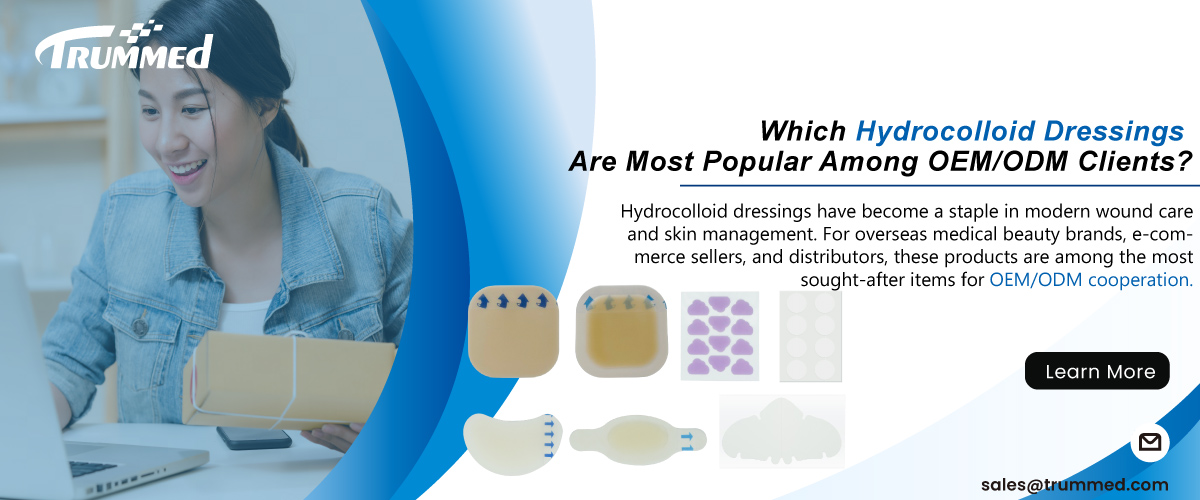
Let’s take a closer look at the most frequently requested hydrocolloid dressing categories, along with their common customization needs from a supply chain perspective:
1. Acne Patches
Main Markets: North America, Europe, Japan, Korea
Typical Requests:
*Size & Shape: Small round patches (10–12mm) are the standard; some clients prefer star or heart-shaped versions for branding.
*Packaging Preferences: Single blister pack + resealable pouch, or multiple patches per box; focus on portability and unboxing appeal.
*Added Value: Waterproof, makeup-compatible, infused with ingredients like tea tree oil or salicylic acid.
*Design Trends: Asian clients favor cute/kawaii packaging; Western markets lean toward minimalist or Y2K-style visuals.
2. Wound Dressings
Main Markets: Hospitals, clinics, medical e-commerce platforms
Typical Requests:
*Size & Thickness: Common sizes include 5×7cm, 10×10cm, and 15×15cm; thicker versions are preferred for better absorption.
*Packaging: Sterile individual packs, often with printed instructions and traceable labeling.
*Added Value: Enhanced with silver ions, manuka honey, or centella asiatica extract to boost healing and antimicrobial action.
*Market Focus: Medical-grade certifications, clinical validation, and GMP-compliant manufacturing processes.
3. Heel & Friction Blister Patches
*Main Markets: Europe, Japan, sports & footwear retail
Typical Requests:
*Shape & Fit: Ergonomic, high-adhesion shapes that contour the heel and stay in place.
*Packaging: 2–4 patches per pouch; easy-to-carry format for travel or sports use.
*Added Value: Strong stickiness, anti-slip design, friction protection inside shoes.
*Target Consumers: Runners, commuters, hikers — high-frequency use with strong repurchase potential.
2.Three Major Trends Driving Hydrocolloid ODM Development
As buyer profiles diversify and consumer expectations evolve, hydrocolloid dressing OEM/ODM services are moving in new directions. Here are three key supply-side trends:
1. Thinner, More Invisible Designs
Everyday wearability is essential — especially for acne patches. Manufacturers are improving coating and drying processes to deliver ultra-thin, barely-there dressings that blend seamlessly with skin.
2. Function Meets Aesthetic
Today’s buyers want more than healing — they want an experience:
*Acne patches are evolving into social media-friendly products, with eye-catching designs and colorful packaging.
*Even medical dressings are seeing upgrades in sustainable materials and visually refined packaging.
3. Low MOQ + Fast Turnaround = Key to Flexibility
Smaller brands and cross-border sellers increasingly demand low MOQs, quick sampling, and agile production. Manufacturers with in-house coating, die-cutting, and flexible production lines have a clear advantage in meeting these fast-paced needs.
Conclusion: Beyond the Dressing — It’s About the Full User Experience
OEM/ODM clients today are looking far beyond basic wound coverage. They seek hydrocolloid products that deliver on function, safety, visual appeal, convenience, and brand storytelling. For suppliers, this means going beyond just manufacturing — and moving toward co-creating standout products with high consumer engagement.