Hot weather poses a real challenge to post-surgical recovery. At 38°C, excessive sweating and increased skin oil can raise the risk of infection, cause dressings to peel off, and even trigger irritation or rash.
In such conditions, choosing the right dressing isn’t just a matter of comfort — it’s a crucial part of safe and effective wound care.
Let’s break it down into three core problems, and provide targeted dressing recommendations for each:
❶ Problem 1: Excessive sweat makes dressings fall off easily
Recommended: Ultra-thin hydrocolloid dressings / Foam dressings with silicone borders
Sweat-induced detachment is common, especially around the back, abdomen, or joints. Modern dressings provide better adhesion and sweat resistance than traditional gauze-tape combinations:
*Ultra-thin hydrocolloid dressings (3mil or 6mil thick): Conform to the skin, virtually invisible, and ideal for minor incisions with light to moderate exudate.
*Silicone-bordered foam dressings: Perfect for cesarean sections or joint surgeries. They stay in place, minimize skin trauma, and withstand body movement.
❷ Problem 2: Heat and humidity trigger itching or skin rash
Recommended: Highly breathable transparent film dressings / Silicone contact layer dressings
Moisture trapped under the dressing can lead to skin maceration or bacterial growth. To address this:
PU transparent film dressings: These semi-permeable membranes offer excellent moisture vapor transmission rates (MVTR ≥ 1200g/m²/24h), allowing sweat to escape while blocking contaminants.
Silicone non-woven dressings: Gentle on sensitive skin and suitable for prolonged use without causing irritation or redness.
❸ Problem 3: Frequent dressing changes slow down healing
Recommended: Medium-absorbency hydrocolloid dressings / Silver ion foam dressings
Changing dressings too often disrupts the healing process and increases infection risk. Especially during days 2–5 after surgery, maintaining a moist wound environment is key:
*Hydrocolloid dressings with moderate absorption: Create a moist, gel-like layer that promotes faster healing and reduces the need for frequent changes.
*Silver-infused antimicrobial foam dressings: Ideal for patients at high risk of infection, these dressings manage moderate to heavy exudate and help control microbial activity.
Conclusion: In summer, wound care is more than just comfort — it’s smart healing
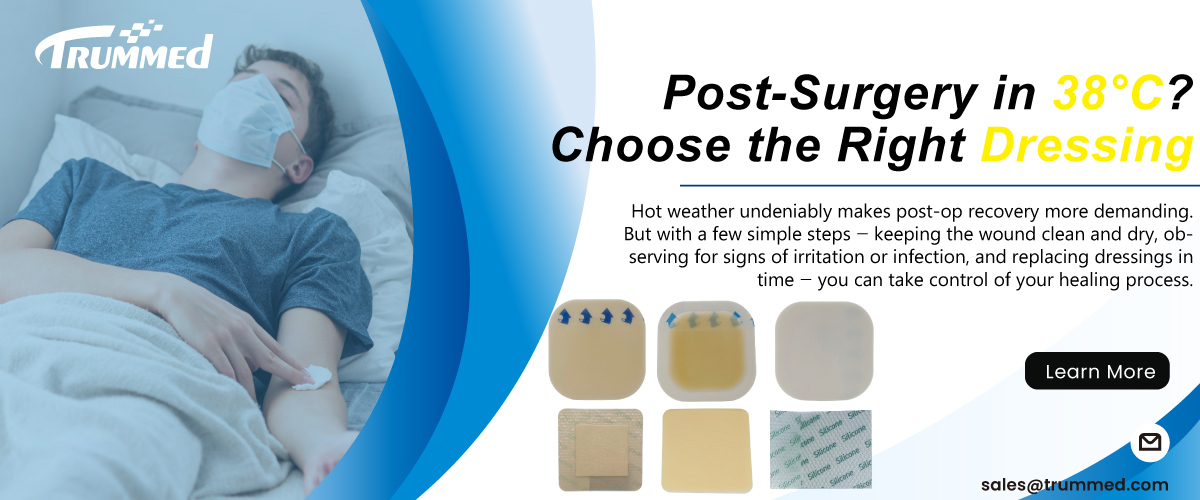
Hot weather undeniably makes post-op recovery more demanding. But with a few simple steps — keeping the wound clean and dry, observing for signs of irritation or infection, and replacing dressings in time — you can take control of your healing process.
Choosing the right dressing is just the first step. What truly matters is ongoing attention, consistent care, and following medical advice — don’t let the heat slow down your recovery.