Silicone scar sheets are widely used to help manage raised scars and improve the appearance of surgical scars. They provide a protective layer over healed skin and help maintain a hydrated environment that may support scar management.
However, using silicone scar sheets incorrectly may reduce their effectiveness or cause unnecessary skin irritation. Understanding common mistakes can help users establish a more appropriate and consistent scar care routine.
1. Applying Silicone Sheets Before the Skin Is Fully Healed
One of the most important mistakes is starting silicone treatment too early.
Although a surgical incision may appear closed, the skin may still be fragile or incompletely healed. Applying silicone sheets over open wounds, scabs, or areas with drainage can interfere with appropriate wound care and increase the risk of irritation.
Silicone scar sheets are intended for fully closed, healed skin rather than open wounds.
What to do instead:
Wait until the incision has completely healed, with no open areas or drainage. Follow the advice of your healthcare professional, particularly after surgery involving deeper tissue or complicated wound healing.
2. Wearing the Sheet for Too Long Too Soon
Consistency is important in scar management, but immediately wearing a silicone sheet for extended periods may not be suitable for everyone.
Prolonged contact can cause excessive moisture buildup, skin irritation, redness, or a rash, particularly in people with sensitive skin.
Some clinical guidance recommends gradually increasing wearing time to allow the skin to adapt. However, the appropriate schedule depends on the product and individual skin tolerance.
What to do instead:
Begin with a shorter wearing period if recommended by the product instructions or your healthcare professional. Gradually increase the duration as tolerated.
Remove the sheet and inspect the skin regularly. If persistent redness, itching, or irritation develops, stop using it and seek professional advice.
3. Applying the Sheet to Dirty or Moist Skin
Silicone scar sheets work best when they are applied to clean, dry skin.
Sweat, excess moisture, skincare products, and dirt can interfere with adhesion and may contribute to skin irritation. Applying a sheet immediately after using moisturizer or scar massage products may also affect how well it stays in place.
What to do instead:
l Clean the scar and surrounding skin gently.
l Allow the skin to dry completely before application.
l Avoid applying creams, oils, or ointments underneath the sheet unless specifically instructed.
l Ensure the sheet is positioned smoothly without unnecessary stretching.
A clean application surface helps maintain comfortable contact between the silicone and the skin.
4. Neglecting to Clean and Replace the Sheet Properly
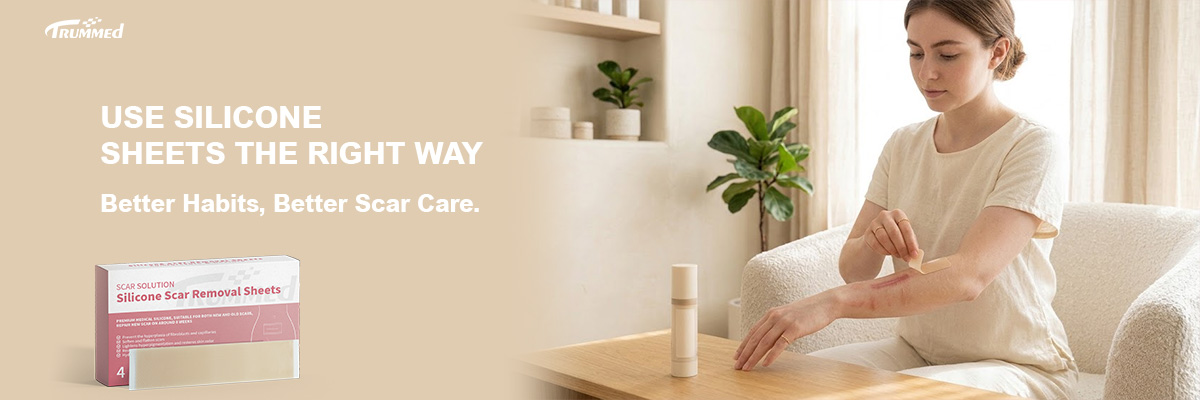
Many silicone scar sheets are reusable, but repeated use does not mean they can be worn indefinitely without cleaning.
Dirt, sweat, and skin oils may accumulate on the sheet. Poor hygiene can contribute to irritation, while improper handling may damage the material or reduce its adhesive performance.
However, replacement timing varies significantly between products.
What to do instead:
Follow the manufacturer's cleaning instructions. For reusable sheets, gentle washing with mild soap and water is commonly recommended.
Allow the sheet to dry as directed before reapplication. Replace it when it deteriorates, becomes difficult to clean, or no longer performs as intended.
Avoid harsh cleaning agents, excessive rubbing, or stretching that may damage the silicone material.
5. Expecting Immediate Results or Stopping Too Early
Scar management is a gradual process.
Silicone scar sheets do not remove scars instantly, and visible improvement may take several weeks or months. Scar appearance is influenced by many factors, including scar type, location, age, skin characteristics, and individual healing responses.
Some users may stop treatment too early because they do not see immediate changes. Others may continue wearing a sheet despite irritation because they believe longer use always produces better results.
Neither approach is ideal.
What to do instead:
Maintain a consistent routine according to the product instructions and professional guidance. Monitor changes in scar thickness, color, texture, and comfort over time.
If a scar becomes increasingly raised, painful, or itchy, consult a healthcare professional rather than simply extending the wearing time.
Conclusion
Silicone scar sheets can be a useful part of scar management when applied to fully healed skin and used appropriately.
Avoiding premature application, excessive wearing time, poor hygiene, improper replacement, and unrealistic expectations can help users establish a safer and more effective routine.
Every scar is different. Consistent care, appropriate product use, and professional guidance remain important for achieving the best possible outcome.