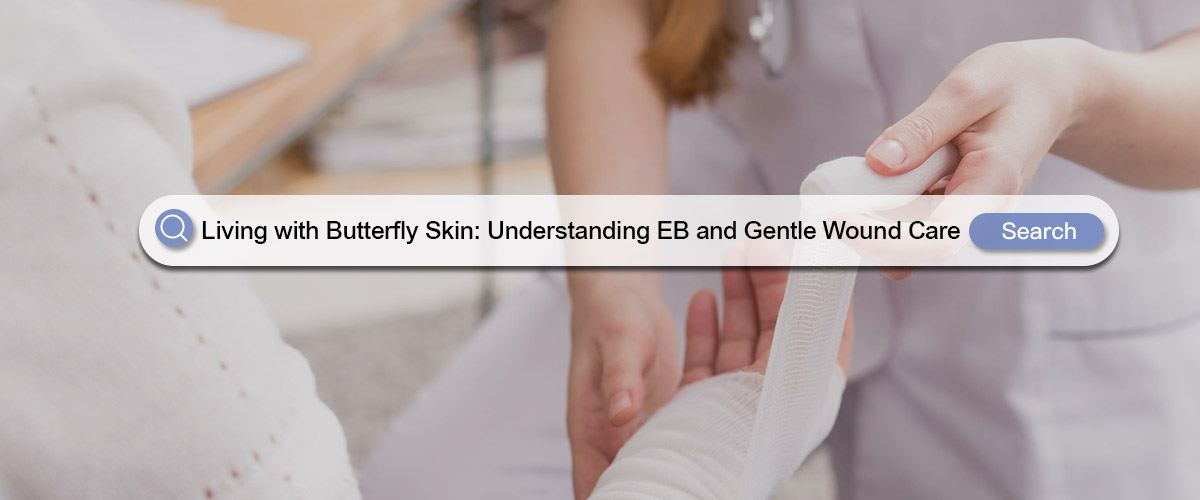
What Is Epidermolysis Bullosa?
Epidermolysis Bullosa is a group of rare genetic disorders that make the skin unusually fragile. Blisters and wounds can develop after minor friction or trauma, and some forms may also affect the lining of the mouth, digestive tract, or other organs.
For children living with Epidermolysis Bullosa (EB), even a small amount of friction can cause blisters or open wounds. Everyday activities such as dressing, playing, and being held may require extra care. Changing a wound dressing can be particularly difficult because removing an unsuitable dressing may damage already fragile skin.
Often called “Butterfly Children,” children with EB need more than wound protection. They need a care routine that minimizes pain, reduces further skin injury, and helps them feel safe and supported.
EB is often present from birth or early childhood, although symptoms and severity vary. The four major types are:
l Epidermolysis Bullosa Simplex (EBS): Blisters typically form within the outer layer of the skin.
l Junctional Epidermolysis Bullosa (JEB): Blisters develop in the junction between skin layers.
l Dystrophic Epidermolysis Bullosa (DEB): Blisters form beneath the outer skin layer and may heal with scarring.
l Kindler Epidermolysis Bullosa (KEB): A rare form associated with skin fragility and other skin changes.
There is no single wound dressing suitable for every person with EB. Care must be adapted to the individual’s EB type, wound condition, age, and tolerance.
Why Is Wound Care Especially Challenging for Children with EB?
For many children with EB, wound care begins in infancy and may continue throughout life. Unlike a typical wound that gradually heals with routine care, EB can cause repeated blistering and new wounds, making dressing changes a recurring part of daily life.
Several factors make the process particularly challenging:
l Extremely fragile skin: Friction, pulling, or adhesive removal can cause new blisters or skin tears.
l Pain and fear: Previous painful dressing changes may make children anxious before the next session.
l Dependence on caregivers: Babies and younger children rely on adults for positioning, wound assessment, and dressing changes.
l Time and emotional demands: Extensive wounds can make dressing changes lengthy, affecting sleep, school, play, and family routines.
For these children, a good wound care routine should protect the wound while making the process as gentle, predictable, and comfortable as possible.
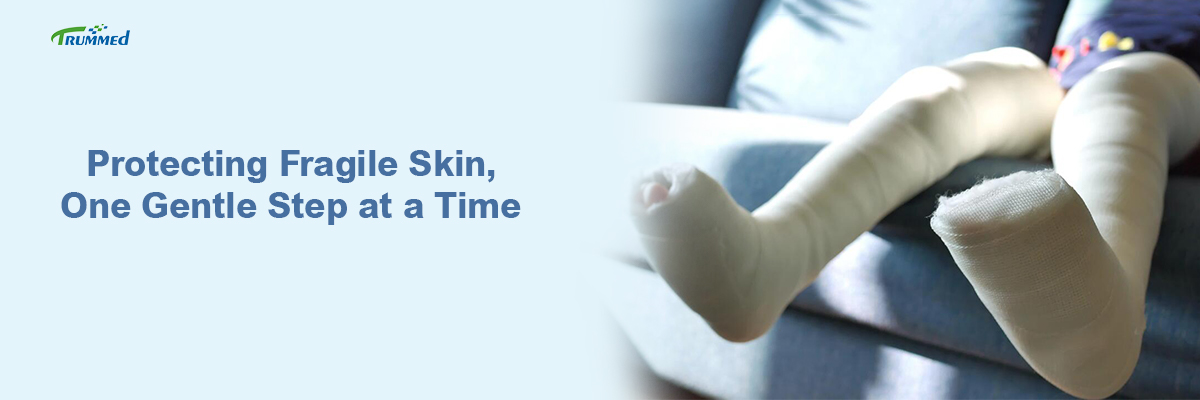
Choosing Suitable Dressings for Fragile Skin
Dressing selection should be based on wound location, exudate level, skin condition, and the child’s individual tolerance. The main priorities are to minimize trauma during removal, manage moisture, and protect vulnerable skin.
1. Non-adherent contact layers
Soft silicone contact layers and other suitable non-adherent dressings help reduce direct adhesion to the wound surface. They can make dressing removal gentler and help reduce avoidable trauma. Adhesive products should not be applied directly to fragile skin unless specifically advised by the specialist team.
2. Soft foam dressings
Appropriate soft foam dressings can absorb wound exudate and provide cushioning against friction. They may be useful for wounds with moderate exudate, provided the product and its fixation method are suitable for the child’s skin.
3. High-absorbency and fiber dressings
For wounds with heavier exudate, selected high-absorbency or fiber dressings may help manage fluid. They must be chosen carefully, as some products require a suitable contact layer or secondary dressing and may not be appropriate for dry or minimally exuding wounds.
4. Medical-grade honey dressings
Medical-grade honey may be considered by healthcare professionals for selected wounds, including those with slough or devitalized tissue, where its wound-cleansing properties may be useful. However, it can cause stinging or pain and may temporarily increase exudate. It is not a routine choice for every EB wound and should be used under professional guidance.
No single dressing works for every person or wound. The best choice is one that meets the wound’s needs while minimizing pain and skin damage.
How to Change Dressings More Gently
For children with EB, dressing changes should be gentle, patient, and carefully planned to minimize pain and further skin damage.
1. Prepare in Advance
Prepare all dressings and supplies beforehand. Explain the process calmly to the child and follow the prescribed pain-management plan.
2. Remove the Old Dressing Gently
Never pull off an adherent dressing. Loosen it with an appropriate solution as recommended by the healthcare team, and remove it slowly without rubbing or pulling the surrounding skin.
3. Clean and Redress the Wound
Clean the wound according to the care plan. Apply a suitable non-adherent dressing and secure it with soft bandaging or another recommended method. Avoid adhesive tape directly on fragile skin.
4. Check and Comfort the Child
Observe the wound for changes in redness, swelling, pain, or discharge. Make sure the new dressing is comfortable and not too tight, and reassure the child throughout the process.
Dressing changes should follow an individualized care plan developed with an EB-experienced healthcare professional.
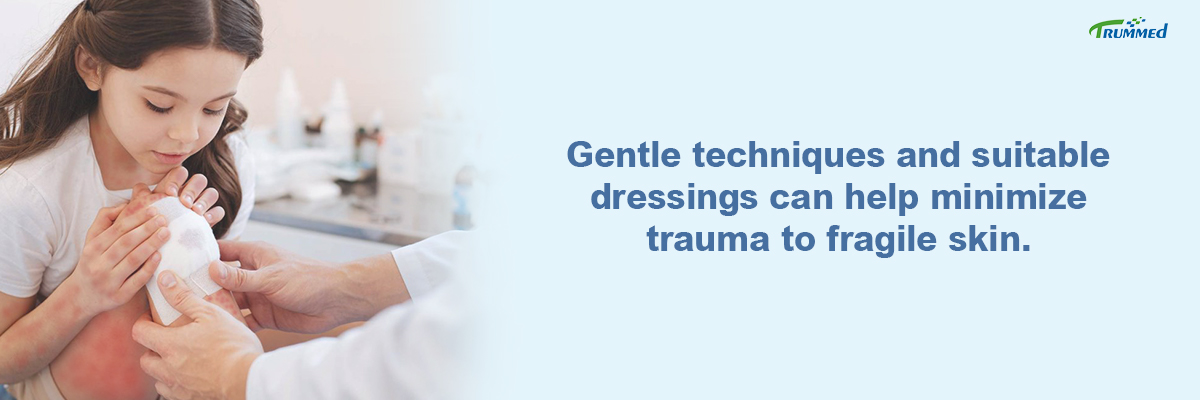
Important Precautions for Parents and Caregivers
l Never rush removal. If a dressing sticks, stop and loosen it according to the care plan rather than pulling it off.
l Avoid direct adhesives. Ordinary adhesive bandages and medical tape can strip fragile skin.
l Do not change products or treatments without advice. Antimicrobial dressings, medical-grade honey, and topical medicines have specific indications and limitations.
l Follow an individualized change schedule. Not every dressing needs to be changed daily. Frequency depends on the wound, dressing, exudate, and clinical advice.
l Seek medical advice when wounds worsen. Fever, spreading redness, increasing pain, unusual discharge, or a wound that is not improving may require prompt assessment.
Beyond Wound Care: Supporting Everyday Life
For children with EB, wound care is not just a medical task. It is part of everyday family life. Gentle techniques, suitable dressings, and a predictable routine can help reduce avoidable discomfort and make care more manageable.
Equally important is recognizing the child beyond the condition. With individualized care and support, children with EB can be better supported in resting, learning, playing, and participating in family life.
The goal is not simply to cover a wound, but to protect fragile skin while preserving comfort, dignity, and quality of life.
References
l DEBRA International. Best Practice Guidelines: Skin and Wound Care in Epidermolysis Bullosa. Clinical practice guideline
l DEBRA of America. Care for EB Wounds. Patient and caregiver guidance
l A consensus approach to wound care in epidermolysis bullosa. Peer-reviewed article