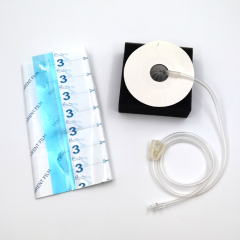
Lab Instruments
Laboratory instruments are a diverse set of specialized tools designed to enable accurate, efficient, and safe execution of scientific experiments, analyses, and sample processing across fields like biology, chemistry, biochemistry, and microbiology.
These instruments range from precision tools for volume handling (e.g., pipettes for transferring microliter-to-milliliter liquid volumes) and mass measurement (e.g., analytical balances with mg-level accuracy) to devices that manipulate or characterize samples—such as centrifuges (using centrifugal force to separate mixture components like cells or proteins), microscopes (for observing microscopic structures like microorganisms or cell organelles), and spectrophotometers (measuring light absorption/transmission to quantify substances like nucleic acids or proteins).
They also include equipment that controls environmental conditions (e.g., incubators maintaining stable temperature/humidity/CO₂ for cell/tissue growth, water baths providing constant heat for sample thawing or reagent heating) and ensures sterility (e.g., autoclaves using high-pressure steam to sterilize tools, media, or waste). Collectively, laboratory instruments form the backbone of scientific research and testing, enabling researchers to generate reliable, reproducible data and advance scientific understanding.