Muscle strains are one of the most common injuries faced by athletes during high-intensity activities. To effectively reduce this risk during training and competitions, athletes rely on various protective gear, among which self-adhering bandages stand out for their convenience and efficiency as a powerful tool for preventing muscle strains.
What Are Self-Adhering Bandages?
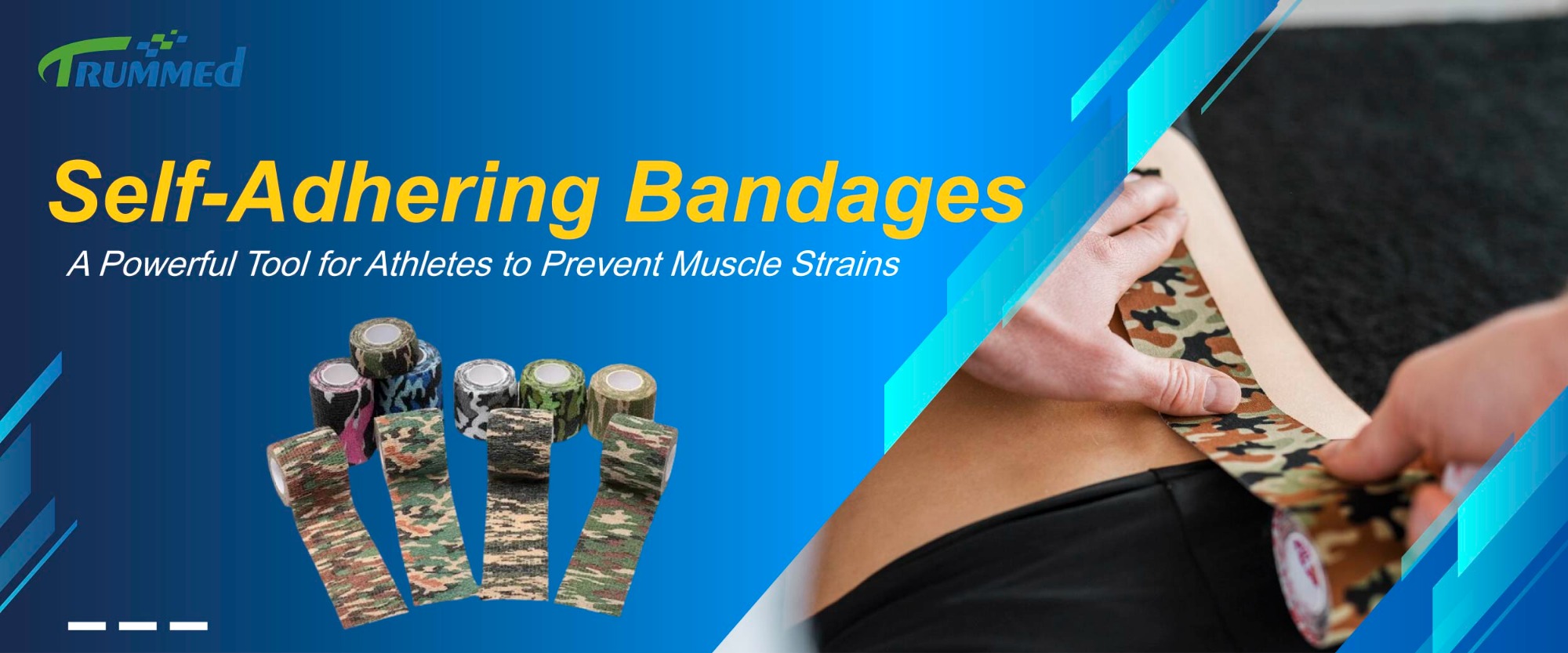
Self-adhering bandages are elastic bandages that do not require additional glue or clips. Their unique design allows them to stick to the skin or other bandage layers while maintaining good breathability and comfort without irritating the skin. These features make them particularly practical in sports protection.
Advantages of Self-Adhering Bandages
1.Flexible Fixation and Support Self-adhering bandages can closely fit muscles and joints, providing necessary support and reducing the risk of muscle overstretching during movement. Their elastic design also maintains freedom of motion, ensuring athletes' performance is not affected.
2.Convenient and Versatile As they require no additional fixing devices, athletes can quickly wrap them before a game. Self-adhering bandages can be cut to any length, making them suitable for protective needs on different body parts.
3.Dual Functionality: Protection and Compression In addition to serving as a preventive support tool, self-adhering bandages can also provide moderate compression for minor strains or sprains, reducing swelling and alleviating pain.
4.Water-Resistant, Suitable for Various Environments Many self-adhering bandages are water-resistant, ensuring stable adhesion and support even in sweaty or rainy conditions.
Scenarios for Using Self-Adhering Bandages
During Training and Competitions: Wrap self-adhering bandages around high-stress areas (e.g., thighs, calves, wrists) to provide extra support.
Recovery Period: Use self-adhering bandages for compression and fixation on slightly strained or sprained areas to aid recovery.
Outdoor Activities: Portable and lightweight, self-adhering bandages are essential emergency items for hiking, climbing, and other outdoor sports.
How to Use Self-Adhering Bandages Properly
1.Ensure the area to be wrapped is clean and dry to improve adhesion.
2.Cut the bandage to the appropriate length to avoid over-tightening and restricting blood circulation.
3.Slightly stretch the bandage during wrapping to achieve support while maintaining comfort.
4.Press the bandage's end firmly to secure it in place.
Recommended Choices
There are many brands of self-adhering bandages on the market. It is recommended to choose high-quality products with good elasticity, breathability, and skin-friendly materials. For example:
Medical-grade self-adhering bandages for safety and reliability.
Specialized sports bandages tailored for different needs (e.g., reinforced or lightweight options).
Conclusion
With their excellent performance and versatility, self-adhering bandages have become the preferred tool for athletes to prevent muscle strains. Whether you are a professional athlete or an amateur enthusiast, using self-adhering bandages during high-intensity activities can help protect yourself and enhance your performance.