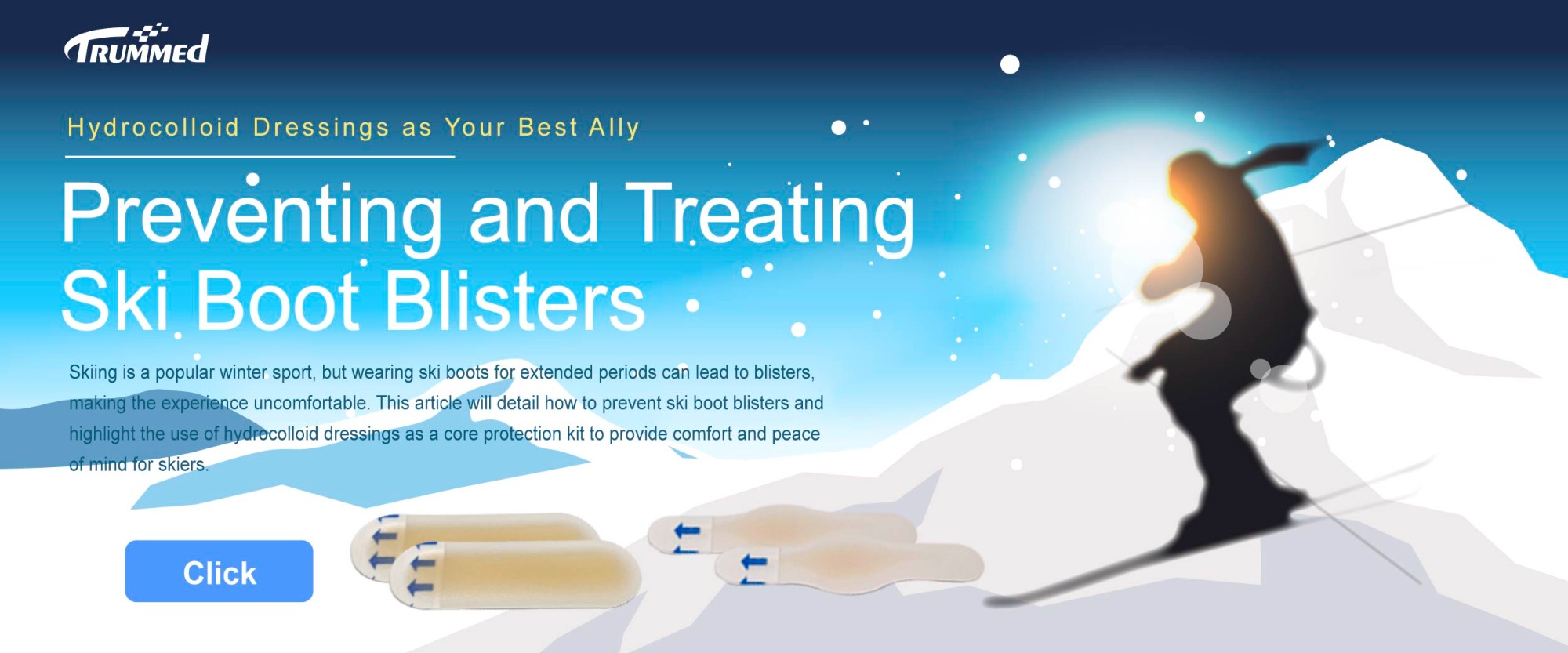
Skiing is a popular winter sport, but wearing ski boots for extended periods can lead to blisters, making the experience uncomfortable. This article will detail how to prevent ski boot blisters and highlight the use of hydrocolloid dressings as a core protection kit to provide comfort and peace of mind for skiers.
Causes of Blisters
Ski boot blisters are usually caused by the following:
Friction: Repeated rubbing between the boot liner and the skin.
Moisture: Sweat or damp conditions increase friction.
Ill-fitting Boots: Boots that are too tight or too loose cause excessive foot movement.
Understanding these causes helps us take effective preventive measures.
Preventive Measures for Ski Boot Blisters
Choosing the right ski boots is the first step to preventing blisters. Ensure your ski boots fit snugly without causing pressure and check that the boot liner is smooth and free of obvious seams or creases. Selecting high-quality ski socks is also essential. Opt for thin, breathable ski socks made of synthetic fibers or wool, and avoid cotton socks as they retain moisture and increase friction.
For protecting key areas, hydrocolloid dressings are highly effective. Apply them preemptively to high-pressure areas like heels and ankles to create a soft barrier that reduces friction while absorbing sweat to keep the skin dry. If hydrocolloid dressings are unavailable, sports tape can serve as a temporary barrier. Additionally, reduce moisture by using dry powders or antiperspirant sprays before skiing and drying your boots with a boot dryer afterward. New boots should be gradually broken in during shorter skiing sessions.
Treatment and Management of Blisters
If blisters do occur, the treatment depends on their condition. For intact blisters, avoid popping them to prevent infection. Instead, cover them with hydrocolloid dressings to promote natural healing. For burst blisters, clean the wound with alcohol or iodine, apply an antibiotic ointment, and then protect it with hydrocolloid dressings to minimize friction and shield the area.
Pain relief can be achieved with over-the-counter medications like ibuprofen. If necessary, reduce skiing activity temporarily to allow the affected area to heal.
Hydrocolloid dressings are medical-grade patches made from absorbent materials, offering several advantages:
Cushioning Protection: Soft patches absorb pressure and reduce friction.
Moist Wound Healing: They maintain a slightly moist environment, accelerating skin recovery.
Versatility: Suitable for blisters, minor abrasions, or cracks caused by skiing.
Skiers are advised to prepare a blister care kit, including hydrocolloid dressings of various sizes for different needs, antibacterial sprays or wipes for quick wound cleaning, and boot dryers to reduce moisture buildup.
Conclusion
Blisters may be small, but they can significantly affect the comfort and enjoyment of skiing. By choosing the right ski boots, high-quality socks, and using hydrocolloid dressings as a preventive measure, you can effectively avoid blisters. If blisters do occur, hydrocolloid dressings can provide quick pain relief and promote healing. Take proper precautions and care to ensure a smooth and enjoyable skiing experience!