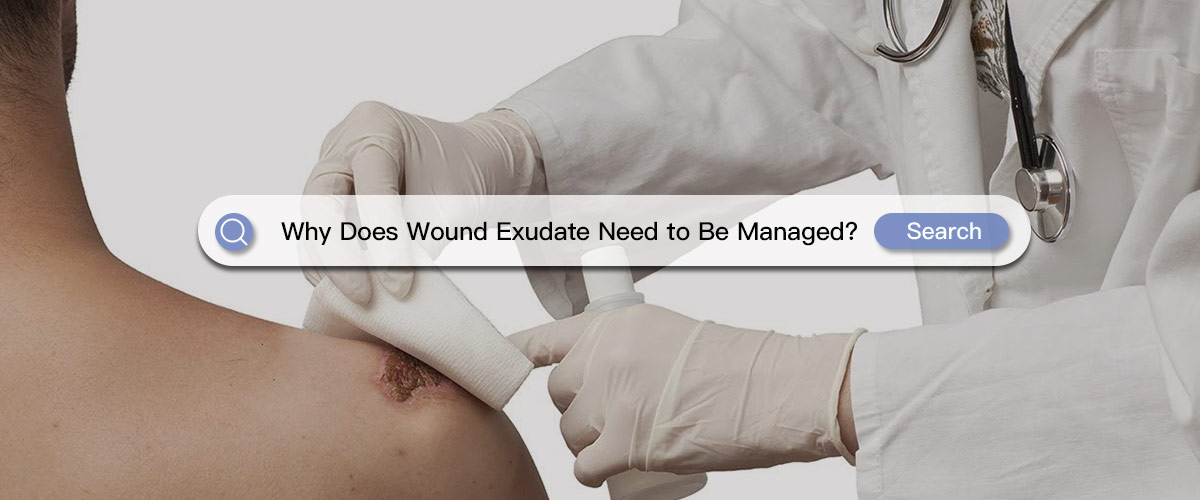
Understanding the Role of Exudate Management in Wound Care
Wound exudate is a normal and important part of the healing process. It helps maintain a moist wound environment and contains cells, proteins, and other components involved in tissue repair.
However, more exudate does not necessarily mean better healing.
When exudate becomes excessive or remains in the wound for too long, it can affect the wound bed, damage the surrounding skin, and interfere with effective wound management. The goal is therefore not simply to “dry out” the wound, but to control excess exudate while maintaining an appropriate moist environment for healing.
Where Does Wound Exudate Come From?
Following tissue injury, the inflammatory response increases vascular permeability. Fluid, proteins, and cells move from the blood vessels into the surrounding tissue and wound area, forming wound exudate.
An appropriate amount of exudate can support the healing process by:
- Maintaining a moist wound environment
- Supporting cellular activity and tissue repair
- Facilitating autolytic debridemen
- Providing a medium for substances involved in the healing process
This is why modern wound care generally aims to maintain a balanced moist wound environment, rather than keeping the wound completely dry.
However, the amount, color, consistency, and odor of exudate should be monitored, as changes may indicate changes in the wound condition and may require reassessment.
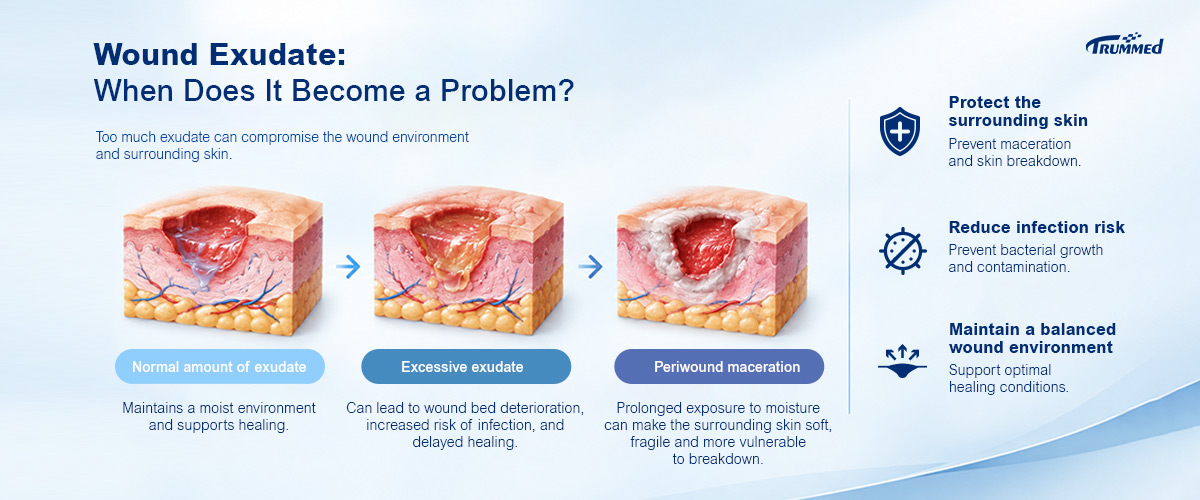
Why Does Excessive Exudate Need to Be Managed?
When the amount of exudate exceeds the wound's ability to manage it, several problems can occur.
1. Periwound Maceration
Prolonged exposure to excessive moisture can cause the skin surrounding the wound to become overhydrated, soft, and fragile. This is known as maceration and can increase the risk of skin breakdown.
2. Leakage and Dressing Failure
If a dressing cannot absorb and retain the amount of exudate produced, saturation and leakage may occur.
This can lead to contamination of clothing or bedding, increased dressing changes, greater nursing workload, and reduced patient comfort.
3. An Unfavorable Wound Environment
Persistent, poorly controlled exudate can contribute to deterioration of the wound environment and may be associated with delayed healing and other complications.
For this reason, effective exudate management should be considered as part of the overall wound assessment—not simply as a matter of choosing a dressing with a higher absorption capacity.
Absorbing Exudate Does Not Mean Drying Out the Wound
This is one of the most important concepts in modern wound care.
The goal is not to dry out the wound.
An effective dressing should remove excess fluid while helping maintain an appropriate level of moisture within the wound bed.
Therefore, dressing selection should not be based on absorption capacity alone.
Clinicians may also need to consider:
- The amount and characteristics of exudate
- Wound size, depth, and location
- The condition of the periwound skin
- Absorption and fluid-retention capacity
- Patient comfort and mobility
- The potential for trauma during dressing removal
- Expected wear time and frequency of dressing changes
In other words, exudate management is both a wound-assessment issue and a dressing-selection issue.
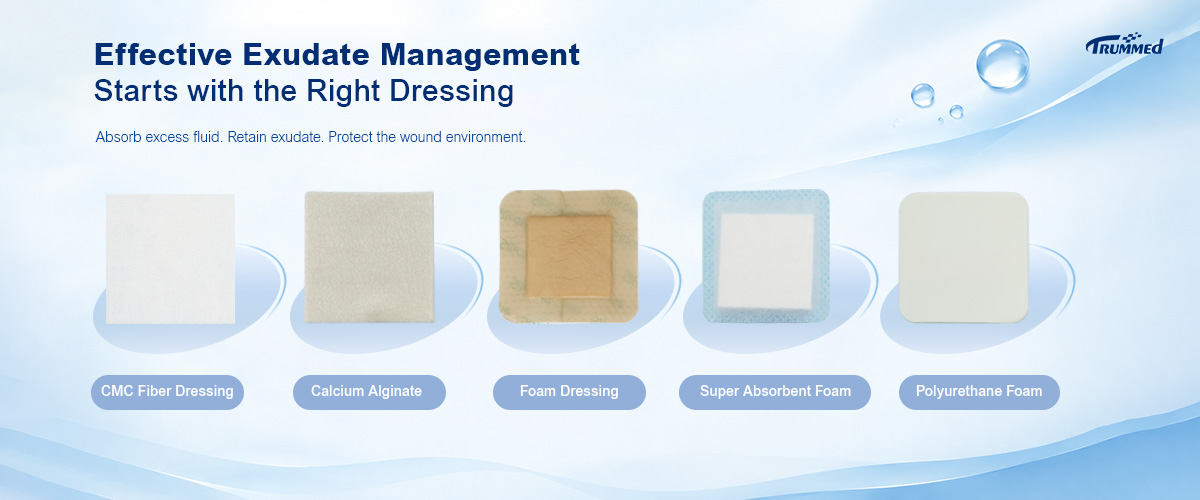
Different Wounds Require Different Exudate Management Strategies
There is no single dressing that is appropriate for every exuding wound.
For wounds with low to moderate levels of exudate, options such as foam and fiber-based dressings may provide effective fluid management.
For wounds producing larger volumes of exudate, superabsorbent dressings may be considered because of their greater capacity to absorb and retain wound fluid.
The appropriate dressing should be selected according to the wound characteristics, level of exudate, condition of the surrounding skin, and the patient's individual needs.
The clinical approach should therefore be:
Assess → Select → Manage → Reassess
rather than simply:
More exudate → More absorbent dressing
An increase in exudate may also indicate a change in the underlying wound condition. The cause should therefore be assessed rather than addressed solely by increasing dressing absorbency.
What Should Clinicians Monitor?
Instead of simply asking:
“How much exudate should we absorb?”
a more useful question is:
“Is the current level of exudate affecting the wound or surrounding skin, and is the current management strategy adequate?”
Key factors to monitor include:
- Exudate amount: Is the amount increasing, decreasing, or remaining stable?
- Color: Has the appearance of the exudate changed?
- Consistency: Has it become thicker or more viscous?
- Odor: Has there been a noticeable change in odor?
- Periwound skin: Is there maceration, erythema, irritation, or skin breakdown?
- Dressing performance: Is the dressing becoming saturated, leaking, or failing to maintain the expected wear time?
These observations should always be interpreted together with the patient's overall condition, wound etiology, and other clinical findings. No single characteristic of exudate should be used in isolation to determine wound status.
Conclusion
Wound exudate is not something that needs to be completely eliminated.
The goal of exudate management is to control excess fluid, protect the periwound skin, and maintain an appropriate wound environment that supports healing.
From foam and fiber-based dressings to superabsorbent dressings, different technologies provide different approaches to managing different levels of wound exudate.
For healthcare professionals and medical device specialists, effective exudate management goes beyond simply asking “How much can a dressing absorb?”
It also means understanding how exudate is absorbed, how it is retained, when the dressing should be changed, and how to maintain a balanced wound environment throughout the healing process.