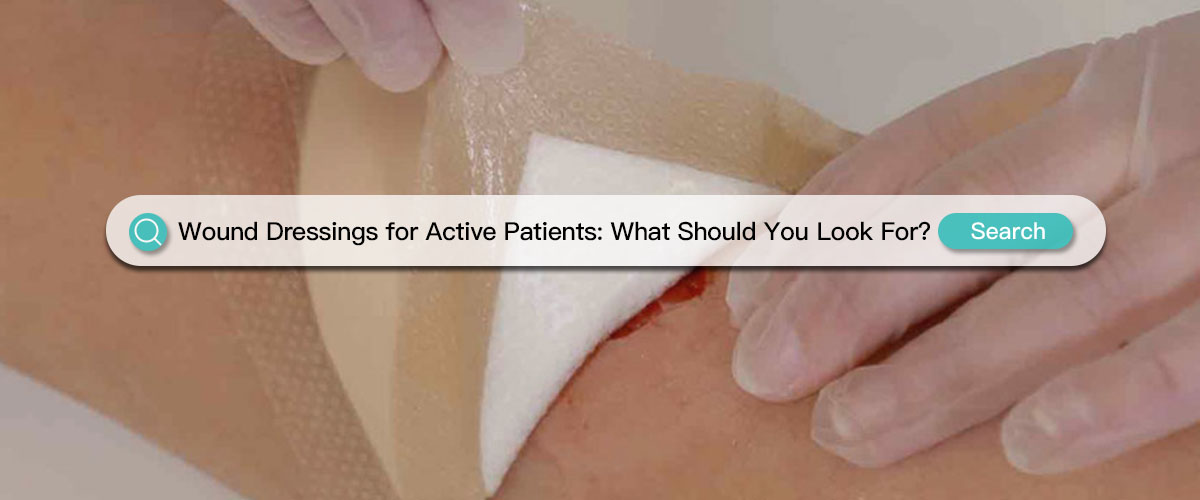
For active patients, choosing a wound dressing is about more than simply covering the wound. Walking, exercising, bending joints, sweating, and everyday movement can all affect how well a dressing performs.
A dressing that works well when the body is still may not perform as effectively when the patient is constantly moving. This makes flexibility, secure adhesion, moisture management, and comfort important considerations when selecting a dressing for active use.
1. Flexibility and Conformability
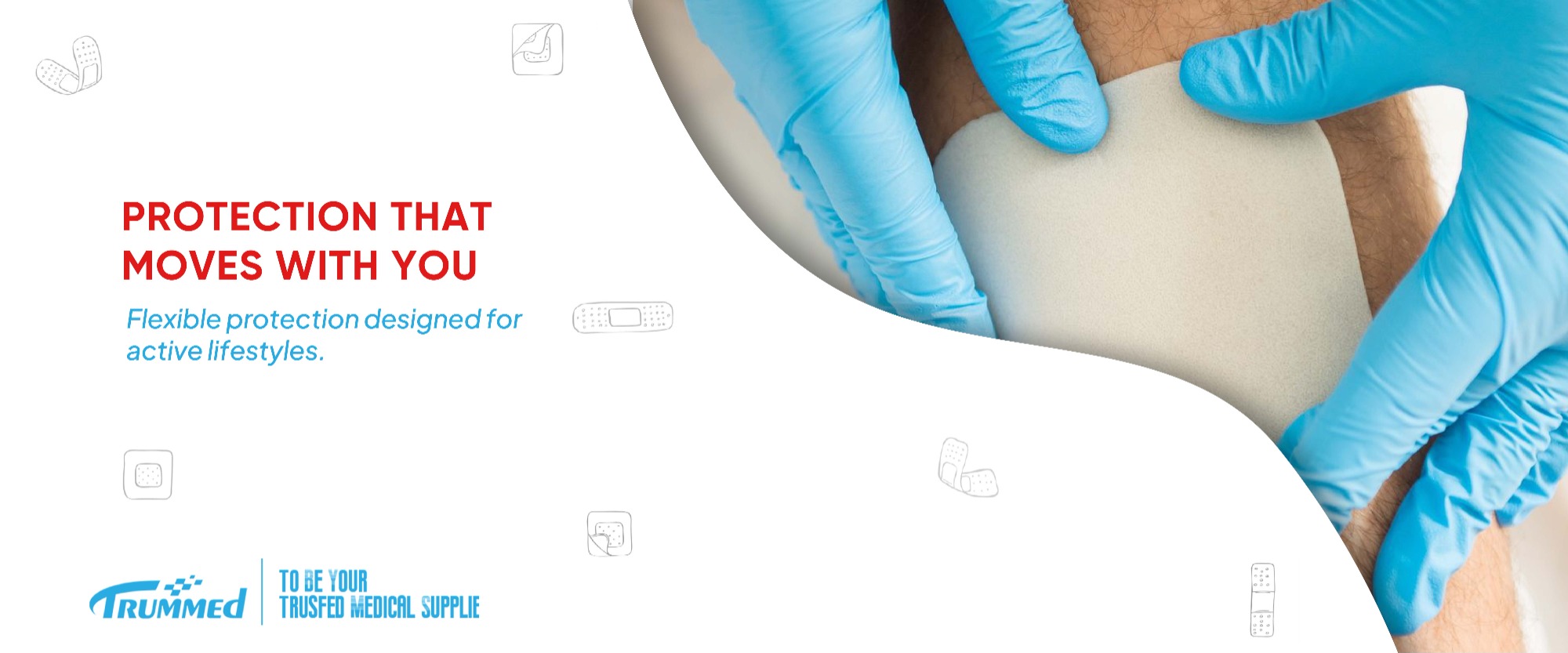
Areas such as the knees, elbows, ankles, and hands are constantly moving. A rigid dressing may wrinkle, lift at the edges, or lose contact with the skin during movement.
A suitable dressing should be flexible enough to follow the body's contours and accommodate normal movement. Conformability is particularly important because a dressing that maintains close contact with the wound can help reduce gaps where wound fluid may accumulate. Research has also highlighted conformability as an important performance characteristic for modern dressings.
For active patients, materials such as flexible foam, film, and other conformable dressing designs can be considered depending on the wound and its exudate level.
2. Secure but Skin-Friendly Adhesion
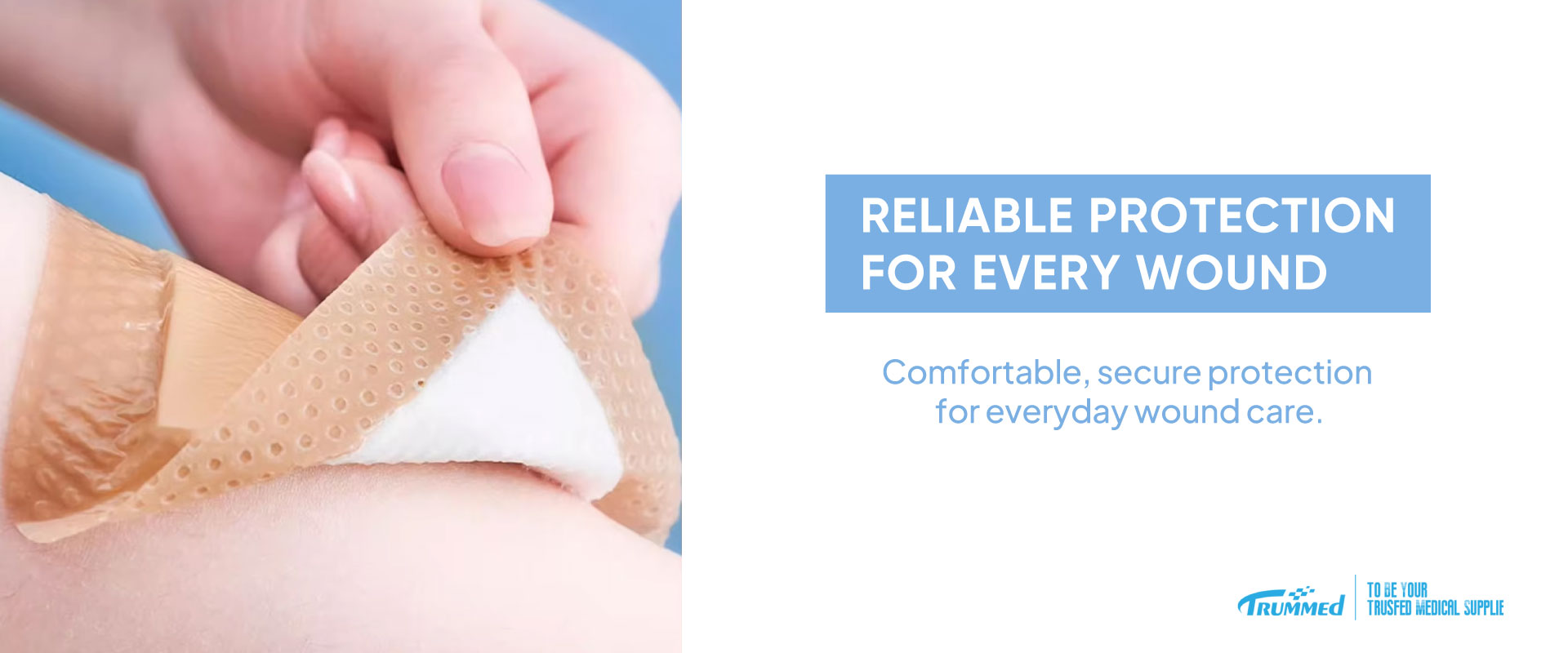
Movement creates friction and tension between the dressing and the skin. If adhesion is insufficient, the dressing may shift or peel away. On the other hand, excessively aggressive adhesives may make dressing removal uncomfortable or cause unnecessary trauma to the surrounding skin.
Therefore, the goal is not simply to find the "strongest" adhesive. A well-designed dressing should provide reliable fixation throughout its intended wear time while allowing removal without unnecessary damage to the wound or surrounding skin.
Dressing selection should also consider the patient's skin condition, especially when frequent dressing changes are required.
3. Effective Exudate Management
Physical activity may make dressing performance more challenging, particularly when a wound produces moderate or high levels of exudate.
Exudate itself is a normal part of wound healing, but excessive accumulation can contribute to leakage and maceration of the surrounding skin. Appropriate dressing selection should therefore take the amount and characteristics of wound exudate into account.
Depending on the wound, options may include:
Hydrocolloid dressings for selected low-to-moderately exuding wounds
Foam dressings for wounds requiring greater fluid absorption
Alginate or gelling fiber dressings for wounds with higher exudate levels
Superabsorbent dressings when substantial fluid management is required
The objective is not maximum absorption in every situation, but appropriate moisture balance for the individual wound.
4. Breathability and Moisture Control
Sweat can become another consideration for active patients. A dressing that traps excessive moisture around the surrounding skin may become uncomfortable and potentially affect adhesion.
Breathable backing films can help support moisture vapor transmission while providing a protective barrier against external contaminants. The balance between moisture retention and moisture loss is important because wound care generally aims to maintain an appropriate moist environment rather than allowing the wound to become either excessively wet or excessively dry.
5. Comfort During Everyday Movement
A dressing should not unnecessarily restrict normal activity.
Thickness, flexibility, edge design, weight, and surface texture can all influence how a dressing feels during movement. For patients who need to remain active, a low-profile and conformable design may be preferable where clinically appropriate.
Comfort is not simply a cosmetic consideration. Patient comfort, ease of application, and dressing-change requirements can influence whether patients are able to follow their wound-care plan consistently.
6. Choosing the Dressing According to the Wound
There is no single dressing that is ideal for every active patient.
Before selecting a product, consider:
Wound type → Exudate level → Wound location → Skin condition → Activity level → Required wear time
For example, a small superficial wound on an area with frequent movement may require a different dressing design from a moderately exuding wound on the lower leg.
The dressing should therefore be selected based on both wound characteristics and patient needs, rather than activity level alone.
Final Thoughts
For active patients, an effective wound dressing needs to do more than protect the wound. It should remain securely in place, conform to body movement, manage exudate, protect surrounding skin, and provide sufficient comfort for everyday activities.
For healthcare providers and medical product developers, these requirements also highlight the importance of dressing design. Flexibility, adhesion, absorbency, breathability, conformability, and ease of removal all contribute to the overall performance of a wound dressing.
The right combination will ultimately depend on the wound, the patient's skin condition, and the intended clinical application.