Have you ever noticed that a pimple disappears, only to reappear in exactly the same spot a few weeks later? Whether it is on your chin, forehead, or cheeks, recurring breakouts can be frustrating. You may start to wonder: Is the previous pimple not completely healed, or is something else happening beneath the skin?
The answer is not always straightforward. Acne can repeatedly develop in the same area for several reasons, from persistent pore congestion to hormonal fluctuations and everyday habits.
1. The Same Spot, Again?
When acne repeatedly appears in one area, it does not necessarily mean that the original pimple never went away.
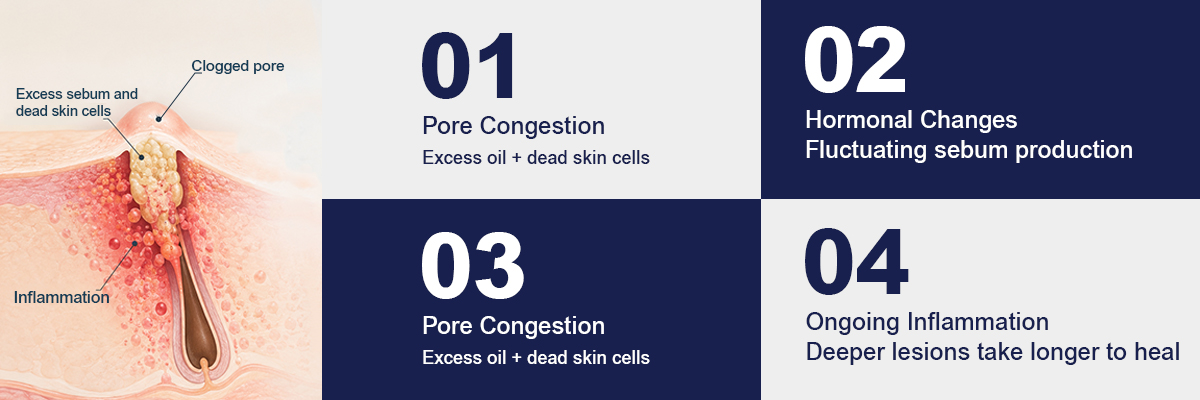
Acne develops when hair follicles become clogged with excess sebum and dead skin cells. This creates an environment where Cutibacterium acnes, a bacterium naturally found on the skin, can contribute to inflammation.
If the surrounding area remains prone to clogged pores, new breakouts may continue to form even after an earlier pimple has healed. In other words, the location may be the same, but the individual breakouts may be different.
2. Why Does Acne Keep Returning to the Same Area?
Several factors can make certain areas of the skin more likely to develop recurring breakouts.
Some areas may continue to accumulate excess oil and dead skin cells. When this buildup blocks hair follicles, new blackheads, whiteheads, or inflamed pimples can develop. Without addressing the underlying congestion, breakouts may keep returning.
Hormones influence sebum production. Changes associated with puberty, menstrual cycles, pregnancy, or other hormonal shifts can increase oil production and contribute to acne. This is one reason some people notice recurring breakouts around the chin and jawline.
- Friction and repeated contact
Everyday contact can also aggravate acne-prone skin. Tight clothing, helmets, phone screens, masks, and frequent touching may create friction or pressure. Sweat and trapped moisture can further irritate the affected area.
Some deeper acne lesions take longer to resolve than superficial pimples. Inflammation beneath the skin may remain even when the visible swelling has decreased, making the area feel tender or appear to flare up again.
3. Is It a New Pimple or the Same One?
Not every recurring bump is a new acne breakout.
A pimple may become less noticeable while some inflammation remains beneath the surface. Alternatively, a nearby pore may become clogged and produce another blemish in almost the same location.
However, a bump that persists for a long time, repeatedly swells in exactly the same spot, or remains deep and painful may not be ordinary acne. Conditions such as folliculitis or an epidermoid cyst can sometimes resemble acne.
If a lesion does not heal, repeatedly drains, becomes increasingly painful, or leaves scars, it is worth seeking advice from a dermatologist rather than repeatedly treating it as a regular pimple.
4. Habits That May Make Recurring Acne Worse
When a breakout appears again, it is tempting to squeeze it or use stronger products to make it disappear quickly. However, some common habits can irritate the skin and make acne harder to manage.
Picking or squeezing pimples: This can increase inflammation, damage surrounding tissue, and raise the risk of post-acne marks and scarring.
Over-cleansing or harsh exfoliation: Scrubbing too frequently can irritate the skin and weaken its protective barrier.
Using pore-clogging products: Some makeup, sunscreen, and hair-care products may contribute to clogged pores. Look for products labeled non-comedogenic or oil-free.
Ignoring repeated friction: Regular pressure or rubbing from clothing, accessories, or daily activities may aggravate acne-prone areas.
A consistent, gentle routine is generally more helpful than constantly switching products or trying to remove blemishes aggressively.
5. How Can You Care for Recurring Breakouts?
Managing recurring acne means looking beyond the visible pimple. The goal is not only to care for an existing blemish but also to reduce the factors that contribute to new breakouts.
Start with gentle cleansing and suitable skincare products. Ingredients such as salicylic acid may help unclog pores, while topical retinoids can help prevent the formation of new comedones. The right approach depends on your skin type and the severity of your acne.
For an individual superficial pimple, a hydrocolloid acne patch can provide a protective covering and absorb small amounts of fluid from suitable surface-level blemishes. It may also help reduce direct touching or picking. However, it does not clear clogged pores or address hormonal factors, so it should not be considered a treatment for the underlying causes of recurring acne.
For persistent, deep, or painful breakouts, professional advice can help identify the cause and determine an appropriate treatment plan.
Conclusion
Acne that keeps returning to the same area is not necessarily the same pimple coming back. Persistent pore congestion, hormonal changes, local friction, and ongoing inflammation may all play a role.
Understanding what makes a particular area prone to breakouts is an important step toward managing acne more effectively. Rather than focusing only on each individual pimple, pay attention to the patterns behind recurring breakouts.