Introduction
Approximately 1%–2% of the global population is living with chronic wounds, such as diabetes and cardiovascular disease. As global aging accelerates, chronic wounds — diabetic foot ulcers, pressure injuries, venous leg ulcers and others — have evolved from a "minor surgical problem" into a public health burden characterized by high prevalence, prolonged healing and substantial costs.
Understanding chronic wounds means understanding the core needs of the market — and NPWT (Negative Pressure Wound Therapy) is one of the technology directions in this field with the strongest evidence base.
1. What is Chronic Wound?
Definition: A chronic wound is a wound in which pathological factors disrupt the normal healing process, preventing it from completing repair within the expected time and sequence, resulting in delayed or non-healing.
Clinical criteria (general reference):
● The wound has not healed after more than 4 weeks; or
● The wound area has not reduced by 40%–50% within 4–6 weeks of standard care.
Fundamental difference from acute wounds: Acute wounds (e.g., surgical incisions, acute trauma) progress through healing in an orderly manner, while chronic wounds become stalled in the inflammatory phase and never advance to the granulation and remodeling phases — like a "stuck machine."
2.Common Types of Chronic Wounds
| Type |
Cause |
Common Location |
Typical Features |
| Diabetic foot ulcer (DFU) |
Neuropathy + vascular disease + infection |
Pressure-bearing points of the sole, toes |
Reduced sensation, easily overlooked; the most difficult to heal — lifetime risk as high as 19%–34% in people with diabetes |
| Pressure injury (pressure ulcer) |
Ischemia caused by prolonged local pressure |
Sacrum, heels, hips |
Most common in long-term bedridden patients; well-defined staging system |
| Venous leg ulcer (VLU) |
Venous valve insufficiency, blood pooling |
Lower third of the medial lower leg |
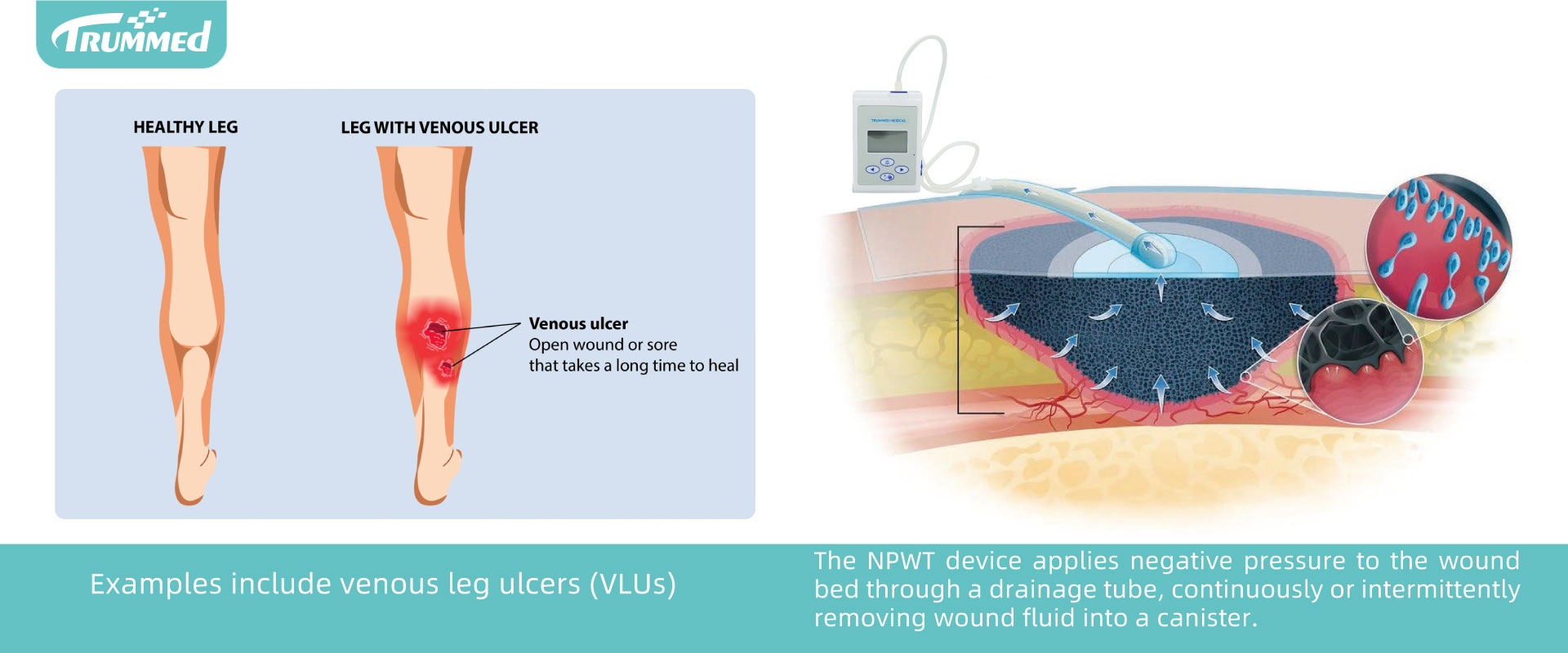
Account for 70%-90%of all leg ulcers; often accompanied by edema and pigmentation |
| Arterial ulcer |
Atherosclerosis, insufficient blood supply |
Toes, lateral foot, anterior shin |
Severe pain, pale wound bed; symptoms worsen when the limb is elevated |
Other types include non-healing postoperative incisions, radiation-induced wounds, and malignant (cancerous) wounds, among others.
(Photo source: Internet)
3. Why Do Chronic Wounds "Never Seem to Heal"? — Key Nursing Challenges at a Glance
Stalled inflammatory phase: Pro-inflammatory factors remain highly expressed, growth factors are destroyed, and the healing signal "never gets through".
Biofilm: Once bacteria form a biofilm, they become highly resistant — difficult to eradicate with routine debridement and antibiotics, leading to recurrent infection.
Exudate imbalance: Proteases in the heavy exudate degrade newly formed granulation
tissue while macerating the surrounding skin.
Ischemia and hypoxia: Diabetes and atherosclerosis impair local blood supply.
Retained necrotic tissue: Acts as a culture medium for bacteria and blocks epithelial migration across the wound bed.
Systemic factors: Poor glycemic control, malnutrition (low protein levels), immunosuppression, advanced age.
Stalled wound edges: Epithelialization fails to advance; the wound edges become thickened and rolled.
In one sentence: a chronic wound = imbalanced local environment + systemic burden. The core of care is "correcting the underlying cause + wound bed preparation + moisture balance" — conventional gauze dressing changes alone are far from enough.
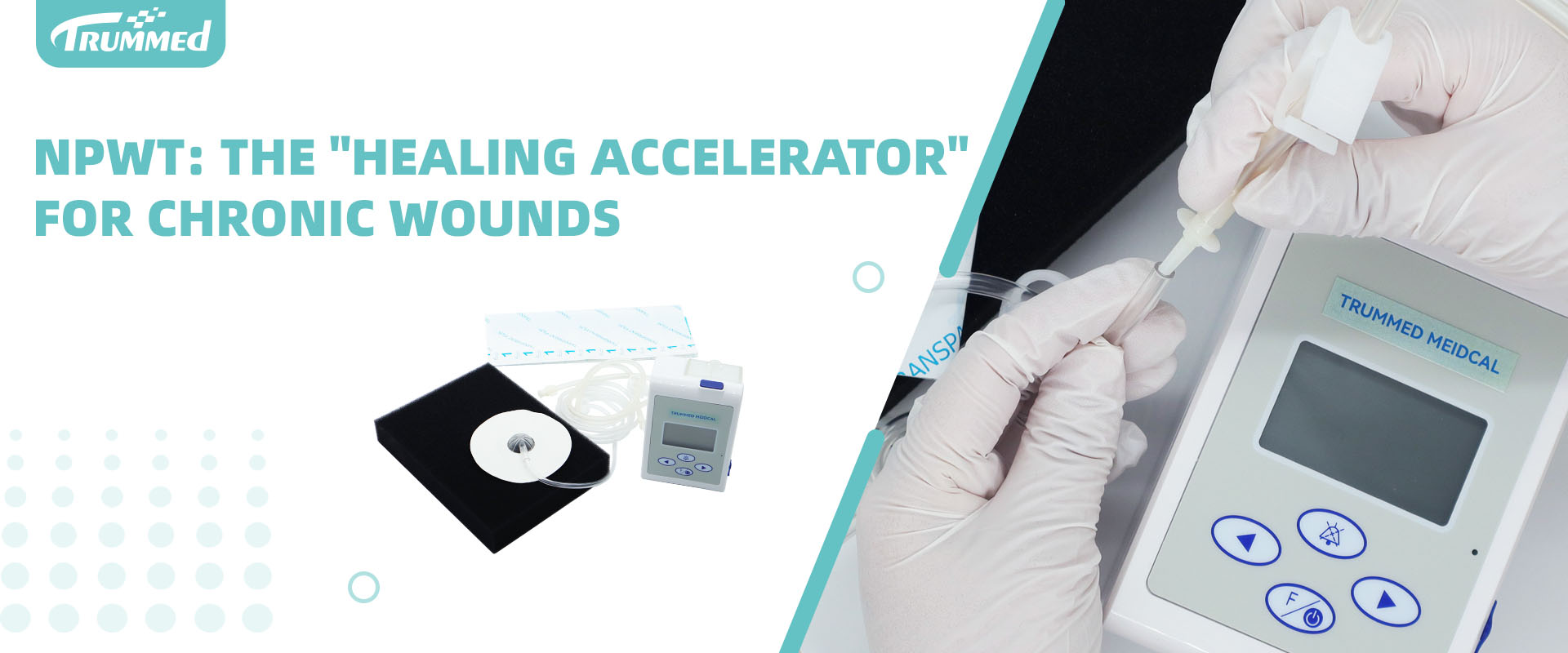
4. NPWT: The "Healing Accelerator" for Chronic Wounds
NPWT (Negative Pressure Wound Therapy) promotes systematic healing by applying controlled negative pressure to the wound — commonly -75 to -125 mmHg in clinical practice:
| Key Problems of Chronic Wounds |
Corresponding Effects of NPWT |
| Excessive exudate; proteases damaging granulation tissue |
Continuous drainage of exudate; removal of harmful components |
| Inflammatory edema; poor circulation |
Reduced edema; improved local perfusion |
| Slow granulation tissue growth |
Micro/macro-strain stimulation; accelerated granulation formation |
| Non-contracting wound edges |
Negative pressure physically contracts the wound and draws the edges together |
| Risk of recurrent infection |
Closed system isolates the wound from external contamination |
| Frequent dressing changes; patient discomfort |
One dressing lasts 48–72 hours, significantly reducing change frequency |
Clinical evidence:
① The 2016 Wound Healing Society (WHS) guideline for diabetic foot ulcers recommends NPWT as Class I evidence.
② Multiple randomized controlled trials and meta-analyses show that NPWT shortens healing time and promotes faster granulation compared with conventional dressings.
③ The 2023 IWGDF guideline recommends NPWT for postoperative wounds in people with diabetic foot ulcers.
Important reminder:
NPWT is indicated for wounds that have been debrided, with infection under control and good blood supply. It is contraindicated in the following situations — wounds with undebrided necrotic eschar, exposed blood, vessels/nerves/organs, malignancy at the wound margin, fistulas communicating with body cavities, and untreated osteomyelitis. NPWT does not replace etiological treatments such as offloading, revascularization, or glycemic control.
5. How to Select the Right NPWT Dressing?
| Clinical Scenario |
Recommended Dressing |
| Large granulating wound beds with heavy exudate |
NPWT Dressing Kit with Black PU foam: Great stimulator of granulation tissue |
| Tunnels/sinus tracts; exposed tendons or bone |
NPWT Dressing Kit with White PVA foam: dense and hydrophilic, minimal tissue ingrowth and adhesion; protects delicate structures |
| Graft/donor sites; pain-sensitive or fragile-skin patients |
Porous Silicone Contact Layer + NPWT Dressing Kit with Black PU foam / One-Set Silicone Foam NPWT Dressing Kit: non-adherent to the wound, painless removal |
| Closed surgical incisions (high-risk patients, applied 5–7 days post-op) |
One-Set Silicone Foam NPWT Dressing Kit: reduces SSI, seroma and dehiscence risk |
| Superficial acute/chronic wounds with low-to-moderate exudate (debrided DFUs, Stage II–III pressure injuries, small VLUs, trauma) |
One-Set Silicone Foam NPWT Dressing Kit: non-adherent and painless on removal; |

6. Trummed Product Range: One-Stop Supply from Devices to Consumables
We offer a one-stop NPWT product line, including:
6.1 NPWT Device
- Theraphy Mode: Continous Mode/intermittent Mode
- Pressure Range: -20mmHg to -200mmHg.
- Portable Design: 52mm*85mm*128mm; only 0.22KG
- Alarms: Leak Alarm, Buttery Low Alarm, Canister Full Alarm
6.2 Consumables for NPWT (Core Repeat-Purchase Item)
6.2.1 Canister
Volume 140ML, 400ML, 600ML.
6.2.2 NPWT Dressing Kit
- NPWT Dressing Kit with Black PU Foam: First Choice for Promoting Granulation Tissue
- NPWT Dressing Kit with Silicone Foam: Closed surgical incisions;Pain-Sensitive Wounds & Skin-Graft Protection Scenarios
- Porous Silicone Contact Layer: Used with Black PU Foam for Pain-Sensitive Wounds & Skin-Graft Protection Scenarios
6.3 Support Customization
- Device (pump) customization: custom LOGO on the device surface and packaging; system LOGO customization
- Drainage canister customization: custom LOGO on packaging
- Dressing customization: custom sizes; custom LOGO on packaging
- Personalized accessory customization, e.g., device carry backpack
Chronic wound care is shifting from "experience-based dressing changes" toward systematic, device-driven treatment. As an active therapy with the strongest evidence base, NPWT is seeing sustained demand growth in diabetic foot ulcers, pressure injuries and leg ulcers — and its business model of one-time device purchase with long-term consumable reorders makes it a highly attractive category for wound care distributors.
If you are looking for a reliable NPWT product-line partner, welcome to contact Trummed Medical for more information.