Many people assume that keeping a wound dry helps it heal faster, but medical research reveals that a properly moist environment can significantly accelerate recovery. Moisture not only supports cell migration and tissue repair but also reduces infection risks and scarring. Let’s dive into how humidity influences wound healing and why a moist environment is vital for restoring healthy skin.
1. A Moist Environment Supports Cell Migration and Tissue Repair
One key to wound healing is the migration of epithelial cells, which move to cover and repair the wound surface. A moist environment minimizes scab formation, preventing cells from being blocked and allowing them to reach the wound bed. This facilitates wound closure and sealing. In contrast, excessive dryness causes scabs that hinder cell migration, leaving the skin prone to cracking and prolonging healing.
2. Maintains Hydration, Enhances Nutrient Delivery, and Boosts Immune Defense
A moist environment helps maintain the wound’s hydration, preventing cellular dehydration and promoting blood flow, which enhances nutrient delivery and waste removal. This moisture also enables immune cells, like white blood cells, to quickly reach the affected area, defending against bacteria and contaminants, reducing the risk of infection. On the other hand, overly dry wounds cause cells to lose moisture and deteriorate, further delaying healing.
3. Prevents Cracking and Cell Death, Sustaining Cellular Activity
In dry conditions, cells lose water and die, making it challenging for the epidermis to cover the wound, thus prolonging healing time. A moist environment keeps cells healthy and prevents cracking and premature cell death. This moist condition especially benefits epithelial cell proliferation and migration, accelerating the repair process and allowing faster wound closure.
4. Reduces Scar Formation Likelihood
A moist wound environment also minimizes excessive collagen deposition, effectively reducing the chance of scarring. Under moist conditions, new skin forms in a healthier state, helping wounds heal smoothly and reducing the risk of thick scar tissue. In contrast, dry environments tend to cause uneven healing, increasing the likelihood of noticeable scars.
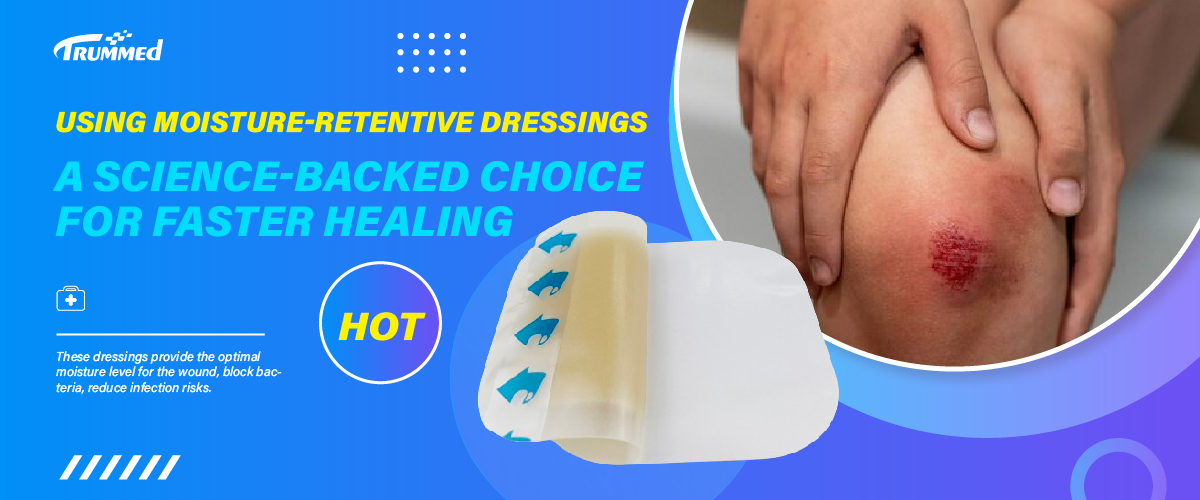
Using Moisture-Retentive Dressings—A Science-Backed Choice for Faster Healing
In modern wound care, hydrocolloid dressing are widely preferred for their moisture-retentive properties. These dressings provide the optimal moisture level for the wound, block bacteria, reduce infection risks, and maintain hydration, enabling natural and faster skin recovery. Research shows that these moist dressings can significantly shorten healing time while lowering the probability of scar formation, offering a highly effective wound care solution.
In summary, the best approach to wound care is to maintain adequate moisture, not dryness. Understanding the impact of humidity on wound healing can help us make more informed choices in daily wound care, supporting healthy skin recovery.