One of the most common questions consumers ask about acne patches is surprisingly simple:
“Why does my pimple sometimes feel worse after using one?”
Some people describe it as “trapping the skin,” while others say the area becomes more swollen, softer, or more inflamed overnight. As acne patches become increasingly common in skincare routines, the discussion around whether they can “clog” or “smother” pimples is growing as well.
But in reality, the answer is more nuanced than a simple yes or no.
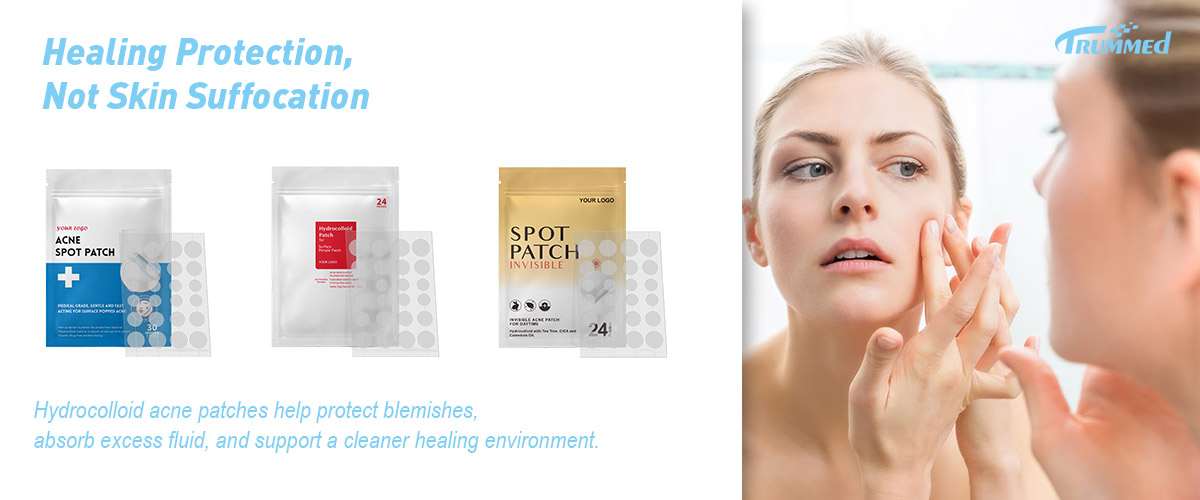
Acne Patches Are Designed to Create a Protective Environment
Most acne patches — especially hydrocolloid patches — work by forming a semi-occlusive barrier over the skin.
Their original purpose is not to “dry out” acne aggressively, but to:
· Protect the blemish from bacteria and friction
· Absorb excess fluid and exudate
· Reduce touching and picking
· Support a moist healing environment
This controlled environment is actually similar to the healing principle used in modern wound dressings.
For the right type of blemish, this can help calm the skin and reduce visible inflammation faster.
However, problems often begin when the patch is used on the wrong type of acne.
Not Every Pimple Is Suitable for an Acne Patch
This is one of the biggest misconceptions in the market today.
Acne patches tend to work best on:
· Whiteheads
· Surface-level inflamed pimples
· Pimples with visible fluid or pus
· Recently popped blemishes that need protection
In these situations, the patch can absorb discharge while preventing external irritation.
But they are usually less effective for:
· Deep cystic acne
· Hormonal acne
· Closed comedones
· Large under-the-skin bumps
· Severe inflammatory breakouts
When a deep pimple is covered for too long, users may experience increased warmth, oil buildup, or swelling beneath the patch. This often leads people to believe the patch itself “caused” the breakout to worsen.
In reality, the blemish may simply have continued developing underneath the skin.
Sometimes It’s Not “Purging” or “Clogging” — It’s Natural Inflammation Progression
A common misunderstanding happens when users apply a patch during the early inflammatory stage of a pimple.
For example:
· A spot looks slightly red at night
· The user applies a patch
· By morning, the bump becomes larger or more painful
The immediate assumption is often:
“The patch made it worse.”
But many pimples — especially hormonal or cystic ones — naturally become more inflamed over the next 12–24 hours regardless of coverage.
The acne patch simply becomes associated with the timing of the flare-up.
This is particularly common with:
· Period-related acne
· Stress breakouts
· Sleep-deprivation acne
· Hormonal jawline acne
These types of blemishes are often driven by deeper inflammatory processes that cannot be resolved through surface protection alone.
Patch Thickness and Breathability Matter More Than People Think
Not all acne patches are engineered the same way.
Some thicker or poorly ventilated patches may create a heavier occlusive feeling on oily skin, especially in humid weather or during extended wear.
Factors that can increase the feeling of “suffocation” include:
· Low breathability film structures · Excessively thick adhesive layers · Long wear times without replacement · Heavy sweating or oil production · Patches that swell significantly after absorption
This is one reason many modern acne patch brands now emphasize features such as:
· Ultra-thin design
· Breathable film technology
· Seamless or tapered edges
· Lightweight hydrocolloid structures
The goal is not only invisibility, but also reducing the sensation of heaviness and trapped moisture on the skin.
Functional Acne Patches Can Also Cause Confusion
Today’s acne patches are no longer limited to basic hydrocolloid protection.
Many newer products now include active ingredients such as:
· Salicylic acid
· Tea tree oil
· Niacinamide
· Microneedle technology
· Anti-inflammatory actives
While these ingredients can improve targeted treatment performance, they may also increase the risk of irritation for sensitive users.
Symptoms such as:
· Redness
· Tingling
· Warmth
· Stinging
are sometimes mistaken for “clogging” or “smothering,” when they are actually irritation responses from active ingredients or compromised skin barriers.
This becomes more common after:
· Over-exfoliation
· Frequent acid use
· Retinol irritation
· Post-aesthetic treatments
· Damaged skin barriers
The Real Question Isn’t “Do Acne Patches Cause Breakouts?”
The better question is:
“Is this patch appropriate for this specific type of acne and skin condition?”
Because when matched correctly, acne patches can help:
· Reduce secondary infection
· Minimize picking damage
· Improve wound protection
· Support cleaner healing
But when used incorrectly — especially on deep inflammatory acne or excessively oily skin for prolonged periods — the experience may feel uncomfortable or ineffective.
Final Thoughts
Acne patches are not automatically “pore-clogging” or “suffocating.”
In many cases, they actually help create a cleaner healing environment.
However, the effectiveness of a patch depends heavily on:
· The type of acne
· Wear duration
· Patch breathability
· Skin condition
· Ingredient compatibility
Understanding these differences is what separates a good acne patch experience from a frustrating one.
And as acne patch technology continues evolving — from hydrocolloid protection to microneedle and functional treatment systems — consumers are becoming increasingly aware that not all patches behave the same way on the skin.