 In today’s skincare landscape, “the more I care for my skin, the more I break out” has become a common frustration. Many people follow detailed routines, use multiple products, and stay updated on the latest ingredients—yet their skin becomes oilier, more reactive, and more prone to clogged pores and inflamed breakouts. The issue isn’t that the routine is insufficient. Rather, it stems from a subtle but widespread problem: over-care.
1. Too Many Interventions: The Skin’s Lipid Film Is the First to Collapse
One of the most overlooked truths is that the skin has a strong self-regulating system. Excessive interference disrupts this balance. Over-cleansing is especially common today—strong foaming cleansers, daily exfoliation, or washing the face multiple times a day gradually strip away the skin’s lipid film.
This lipid film is the skin’s first line of defense, responsible for water-oil balance and regulating the microbiome. Once it is compromised, the skin activates a “self-protection” response and increases sebum production, leading to rebound oiliness. What looks like “too much oil causing acne” is often the result of over-cleansing, which triggers the perfect conditions for whiteheads and inflamed breakouts.
2. Excessive Actives Overwhelm the Barrier and Cause Micro-Damage
Current skincare trends encourage layering—multiple serums, daily acids, mixing vitamin C with AHAs, and frequent sheet masking. Most people don’t realize that the stratum corneum simply cannot keep up with that level of stimulation.
When active ingredients are used too often or in conflict with one another, the barrier develops subtle but persistent damage. Once the skin barrier weakens, several changes follow:
* An increase in transepidermal water loss (TEWL)
* Continuous low-grade inflammation
* Greater sensitivity, tingling, and redness
Under this heightened state of vulnerability, clogged pores, bumps, and repeated breakouts become inevitable. 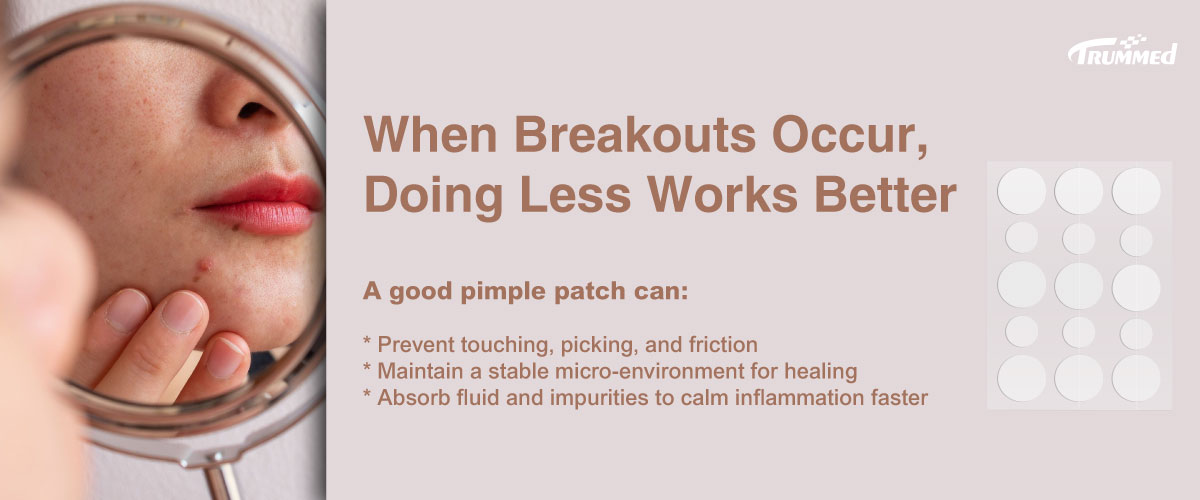
3. Ingredient Overlap Leads to Formula Conflict and Easier Congestion
Skincare is not a building block game. Many ingredients that seem beneficial on their own may clash when used together. Acids with vitamin C, niacinamide with low pH formulas, or layering multiple occlusive creams—these combinations may increase irritation or create excessive occlusion.
When sebum, dead skin, and occlusive layers accumulate on top of a stressed skin barrier, the pores enter a “pressure environment.” Inflammation becomes persistent, and acne appears more frequently and heals more slowly.
4. The Real Issue Isn’t Doing Too Little—It’s Doing Too Much
For many modern users, breakouts aren’t a sign of inadequate care. They’re a sign of too many steps, too much frequency, and too much stimulation. The skin doesn’t need more new products—it needs space to breathe, recover, and rebalance.
5. When Breakouts Occur, Doing Less Works Better
Once pimples appear, continuing to pile on strong actives often worsens irritation. What the skin needs is a simpler, more controlled approach. At this stage, a clean-formula, gentle, protective pimple patch can be far more effective than adding more products.
A good pimple patch can:
* Prevent touching, picking, and friction
* Maintain a stable micro-environment for healing
* Absorb fluid and impurities to calm inflammation faster
Sometimes, the first step to clearer skin isn’t adding more—it’s choosing the right pimple patch and letting your skin breathe.
 In today’s skincare landscape,


