Foot blisters are one of the most common and frustrating problems for runners and long-distance hikers. Hydrocolloid dressings are a simple yet highly effective solution for both preventing blisters and providing emergency care during activity. Here’s everything you need to know.
1.Why Choose Hydrocolloid Dressings?
Hydrocolloid dressings are self-adhesive, moisture-absorbing thin films that offer multiple benefits:
· Protective Cushioning: They create a soft barrier that reduces friction from shoes.
· Moist Healing: Absorb fluid from the blister while keeping the skin around it hydrated, promoting faster repair.
· Comfortable Fit: Conforms to the contours of your foot and stays in place during movement.
· Infection Prevention: Acts as a shield against dust and bacteria.
2.How to Prevent Foot Blisters
① Pre-Apply on High-Risk Areas
· Common friction points: inner side of the big toe, heel, arch, and outer edges of the foot.
· Applying hydrocolloid dressings in advance provides a protective buffer even before blisters form.
② Choose the Right Size and Shape
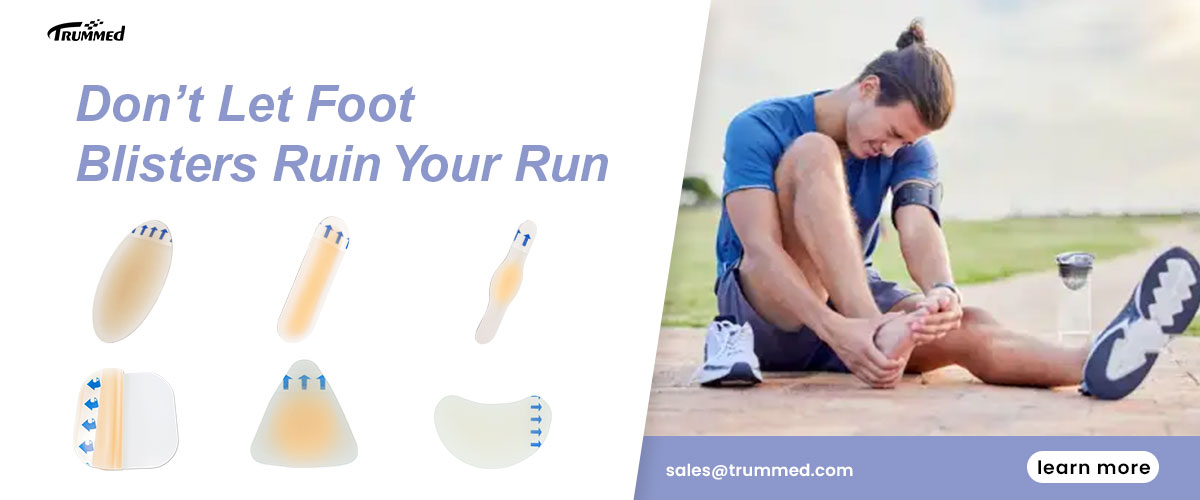
· Pre-cut circles or ovals: Convenient for toes and heels.
· Thickness: Thin dressings are ideal for long-distance running, while thicker ones offer extra cushioning.
③ Combine with Proper Shoes and Socks
· Wear well-fitting running or hiking shoes.
· Choose moisture-wicking, seamless socks.
· Stick the dressing directly on clean, dry skin before putting on socks to prevent slipping.
3.Emergency Treatment for Blisters
If a blister develops during your activity, do not pop it immediately. Hydrocolloid dressings can help with “moist protection + natural healing”:
1. Clean the Area: Gently rinse around the blister with water or saline.
2. Dry the Surrounding Skin: Lightly pat the skin around the blister (do not dry the blister itself).
3. Trim the Dressing: Cut the dressing slightly larger than the blister to ensure full coverage.
4. Apply Carefully: Press gently to adhere smoothly, avoiding air bubbles.
5. Monitor and Replace if Needed: Check during activity; replace if the dressing shifts.
⚠️ Tip: If the blister has already burst, rinse with saline first, then apply the hydrocolloid dressing. It will absorb fluid and protect the wound from infection.
4.Important Notes
· Hydrocolloid dressings are suitable for short-term continuous use; long-term use without replacement may affect skin breathability.
· Test on a small area first if you are sensitive to adhesives.
· Excessive heat or sweat may cause edges to lift; carry spare dressings just in case.
· Do not use directly on infected wounds or pus-filled blisters; treat infection first.
conclusion
For marathon runners and long-distance hikers, hydrocolloid dressings are a practical tool to prevent blisters and manage them during activity, offering “cushioning protection + moist healing.” Keeping your feet comfortable and protected ensures a smoother, uninterrupted journey.