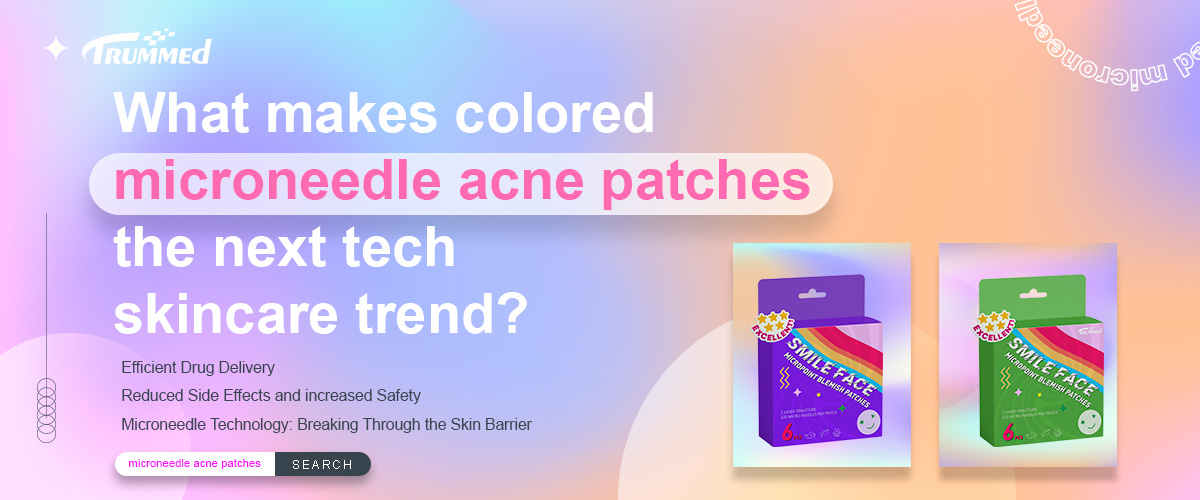
In the traditional acne care market, consumers are familiar with products like acne patches and topical creams, which rely on surface absorption and slow drug release. However, with advancements in technology, the emergence of colorful microneedle acne patches has revolutionized acne care by offering an efficient and precise treatment experience. Microneedle technology, as an emerging skin treatment, enhances drug penetration and accelerates absorption, gradually reshaping the acne care landscape.
1. Microneedle Technology: Breaking Through the Skin Barrier
Traditional acne patches rely on the skin's natural absorption of active ingredients, but the skin's stratum corneum acts as a significant barrier, limiting the depth of drug penetration. As a result, many acne care products require extended use, with limited efficacy. Microneedle technology solves this issue by embedding fine microneedles in the patch. These microneedles can penetrate the skin's outer layer, delivering active ingredients directly to deeper layers. Compared to traditional surface absorption, microneedles create a physical channel that allows active ingredients to reach the problem areas more quickly, speeding up the healing process.
2. Efficient Drug Delivery
Not only does the microneedle acne patch overcome the skin barrier problem, but its core advantage lies in improving drug delivery efficiency. The direct action of microneedles reduces the wastage of topical medications on the skin’s surface and avoids the common issue of “insufficient surface absorption” in traditional acne care products. Through microneedles, active ingredients can reach the root of the acne faster and more precisely, reducing inflammation, inhibiting bacterial growth, and accelerating the acne’s disappearance. This highly efficient drug delivery method enables microneedle acne patches to show results in a short time, meeting consumer demand for fast-acting solutions.
3. Reduced Side Effects and Increased Safety
Compared to oral medications or strong topical creams, colorful microneedle acne patches use localized drug delivery, significantly reducing the risk of systemic side effects. Oral medications need to circulate through the bloodstream and may burden the liver or kidneys. However, microneedle patches act locally, providing a concentrated and precise dosage without affecting other healthy skin tissues. This precise local care not only enhances safety but also alleviates concerns about skin sensitivity or drug resistance among consumers when using acne care products.
4. A Technological Experience for Consumers
The introduction of microneedle technology has turned colorful microneedle acne patches into more than just an effective treatment product; it also provides consumers with a unique technological experience. When using microneedle patches, consumers can feel a slight tingling sensation, giving them a tangible sense of the product's active process. This heightened awareness enhances the ritual and technological appeal of using the product. In the context of consumption upgrades, this experiential product usage stimulates interest in high-tech skincare products, further increasing market acceptance and consumer loyalty.
5. Market Potential and Growth Opportunities
The application of microneedle technology not only improves the efficacy of acne patches but also introduces new growth opportunities for the acne care market. As microneedle technology continues to develop and become more widespread, acne care products are likely to optimize drug formulas, increase treatment efficiency, and even expand into solutions for other skin problems. Additionally, with the aesthetic appeal and fashionable design of colorful microneedle patches, these products will better align with modern consumers' high demands for both personalization and functionality, expanding their influence, particularly among younger demographics.
Conclusion
Colorful microneedle acne patches, through the application of advanced microneedle technology, have enhanced drug penetration efficiency, accelerated acne treatment, and provided a safer, more effective way to meet consumer needs. The advancement of technology has introduced new solutions to the acne care market, and microneedle acne patches stand out as a prime example. They offer consumers an efficient treatment option while opening up new growth prospects for the market.