Pimple patches have evolved from simple acne-care products into a fast-growing category within skincare and beauty. For brands looking to launch their own products, developing a custom pimple patch is not simply about choosing a shape and printing a logo. From material selection and active ingredients to packaging and compliance, every detail can affect the final product.
Here’s a practical look at the key stages of developing a custom pimple patch.
1. Define Your Product Positioning
Before development begins, brands should clarify who the product is designed for and how it should be used.
Will it be an invisible daytime patch, an overnight acne patch, or a more decorative beauty patch? Target consumers, price point, application time, and desired appearance will all influence the product design.
A clear product concept makes it easier to select the right materials and specifications later.
2. Choose the Right Patch Material
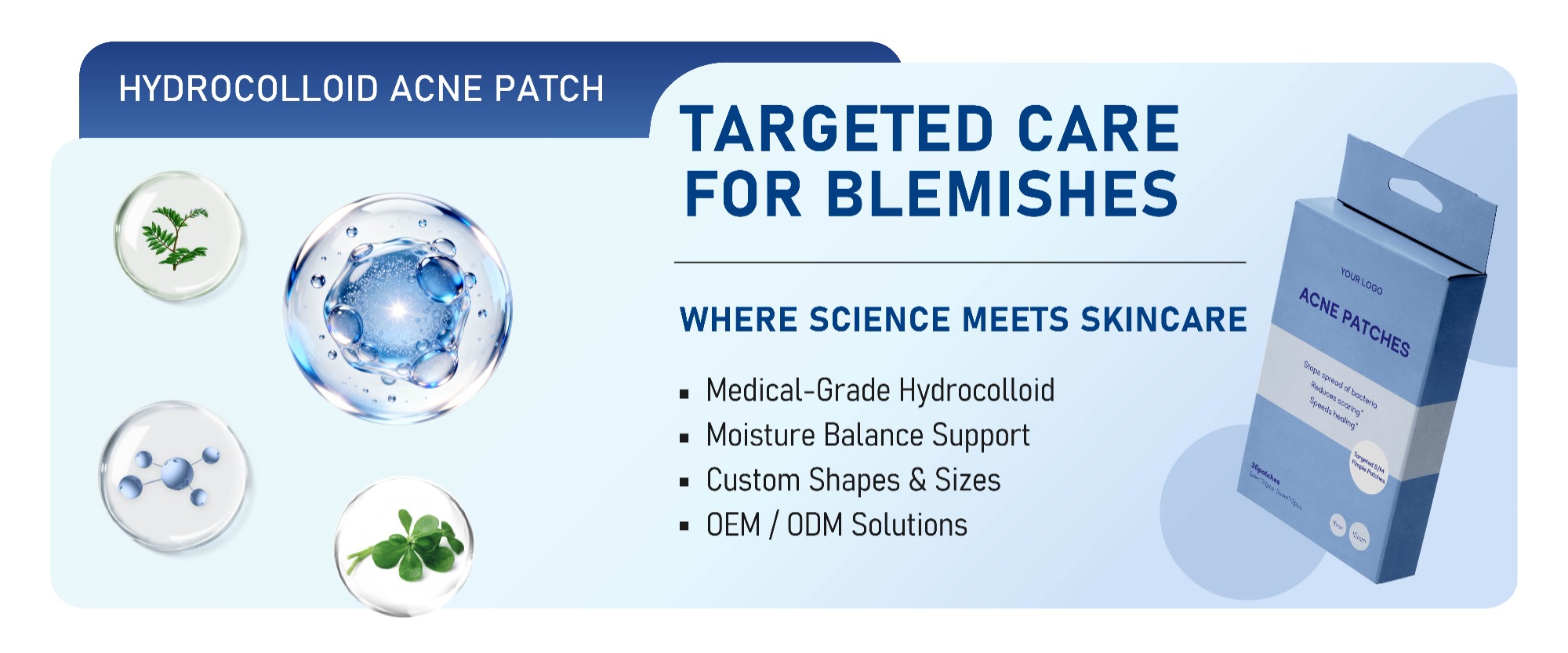
Hydrocolloid remains one of the most widely used materials for traditional pimple patches. It can absorb fluid from blemishes while creating a protective barrier over the affected area.
For brands seeking more advanced skincare applications, microneedle patches can also be considered. These may be designed with specific cosmetic ingredients and are commonly positioned for targeted skincare.
Thickness, flexibility, transparency, adhesion, and edge design should all be considered when selecting the patch structure.
 3. Customize the Formula
The formulation is another important part of product development.
Depending on the product concept, brands may consider ingredients such as salicylic acid, niacinamide, hyaluronic acid, tea tree-related ingredients, or soothing botanical ingredients.
The formula should match the intended product positioning rather than simply including as many ingredients as possible. Compatibility between the active ingredients and patch material should also be evaluated during development.
4. Design the Shape and Appearance
Customization is not limited to ingredients.
Brands can develop different sizes, shapes, colors, patterns, and printed designs to create a distinctive product identity. Traditional round patches can be replaced with stars, hearts, flowers, or other creative shapes.
For daytime products, ultra-thin construction and beveled edges can help create a more discreet appearance and improve comfort under makeup.
5. Test Adhesion and Performance
A good-looking patch is not enough. The product needs to perform consistently in real-world use.
Key factors may include:
· Adhesion to different skin types
· Wear time
· Waterproof performance
· Flexibility and comfort
· Patch transparency
· Material and ingredient compatibility
Testing helps identify potential issues before mass production and ensures that the final product meets the brand's expectations.
6. Create Custom Packaging
Packaging is the final step in turning a product concept into a market-ready product.
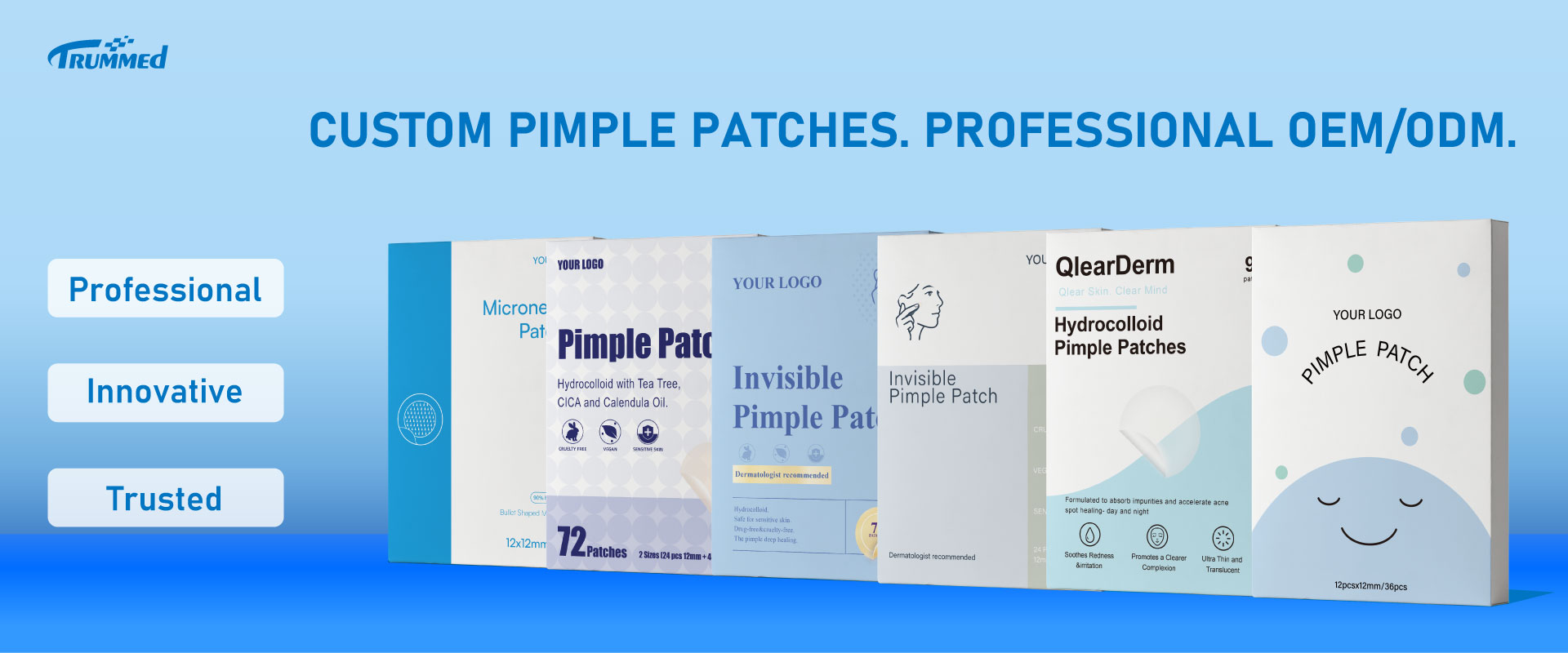
Brands can customize pouch designs, box packaging, patch counts, instructions, colors, and visual elements according to their target market.
Clear communication is especially important. Usage instructions, warnings, product claims, ingredients, and other required information should be reviewed according to the regulations of the target market.
From Concept to Finished Product
Developing a custom pimple patch involves much more than putting a logo on an existing product. The right combination of material, formulation, design, performance, and packaging is essential to creating a product that is both functional and commercially distinctive.
With extensive experience in pimple patches, hydrocolloid products, and microneedle patches, Trummed supports brands throughout the product development process. From material and formulation selection to custom shapes, printing, packaging, and mass production, our experienced team provides OEM/ODM solutions tailored to different brand concepts and market needs. Whether you are developing a new pimple patch line or looking to customize an existing concept, we can help turn your idea into a market-ready product.