
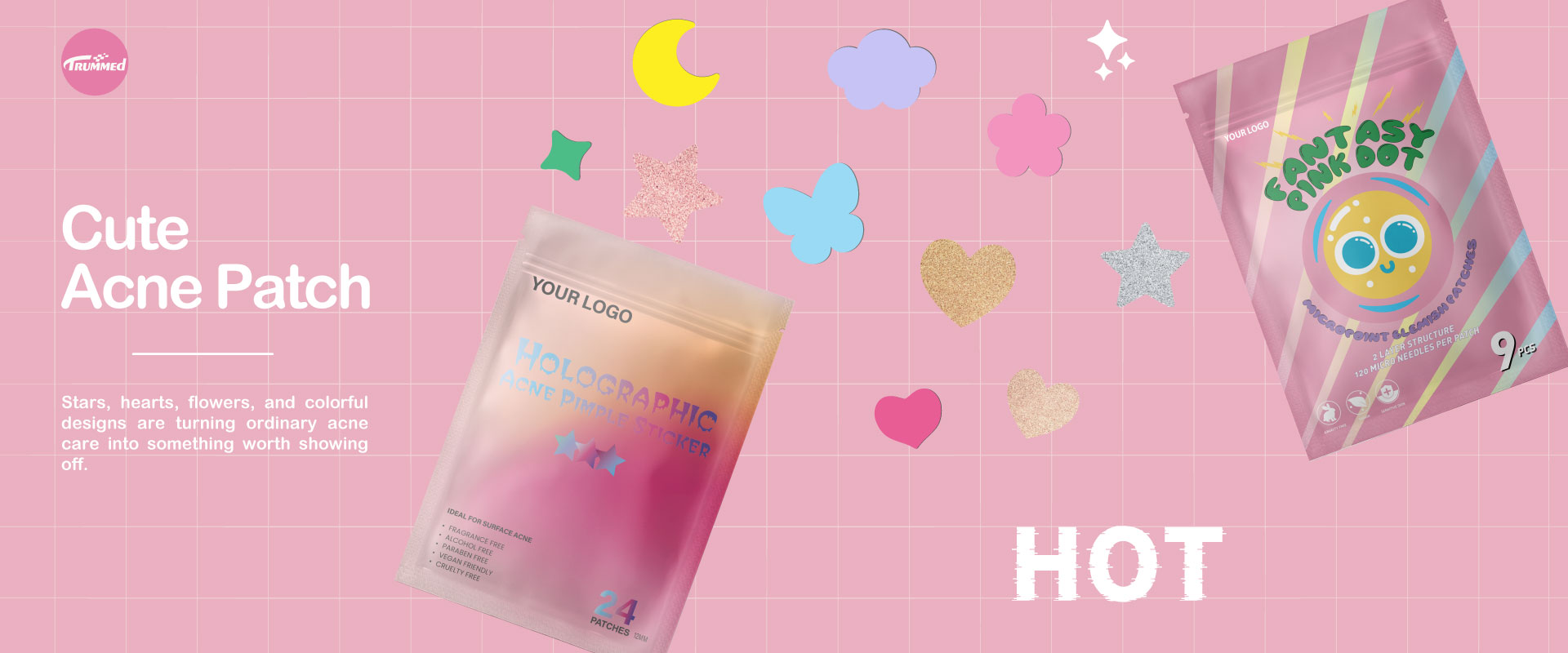
Pimple patches were once almost universally round, transparent, and designed to be as invisible as possible. Today, that is no longer the case. Stars, hearts, flowers, clouds, and other creative shapes are becoming increasingly common in the beauty and skincare market.
But why do pimple patch shapes matter? They are not simply a visual detail. Shape can influence product positioning, user experience, brand identity, and even purchasing decisions.
Beyond the Basic Circle
The traditional round pimple patch has a practical advantage: it is simple, discreet, and easy to manufacture. For consumers looking for a low-profile solution, a transparent circular patch remains a popular choice.
However, skincare is increasingly connected with beauty and self-expression. Consumers, particularly younger shoppers, are becoming more comfortable with products that are visible rather than hidden.
A heart-shaped or star-shaped patch can turn a routine skincare step into something more playful and expressive. Instead of feeling like something that needs to be covered up, the patch can become part of the look.
Shape Can Create a Stronger Brand Identity
In a crowded skincare market, product differentiation is becoming increasingly important.
A standard round patch can be functional, but its appearance may not immediately distinguish one brand from another. Custom shapes provide another opportunity for brands to create recognizable products.
For example, a brand with a playful and youthful identity might choose stars, hearts, flowers, or colorful designs. A minimalist skincare brand may prefer simple geometric shapes or subtle translucent patches.
The shape becomes part of the visual language of the product.
Different Shapes, Different Product Experiences
Shape can also influence how consumers perceive and use a product.
Small patches are suitable for individual blemishes and can provide a discreet appearance. Larger or uniquely shaped patches can cover a broader area or create a more noticeable visual effect.
Brands can also combine different shapes and sizes within one product line. A collection might include small circular patches for everyday use alongside decorative stars or hearts designed for daytime wear.
This creates more opportunities to build products around different consumer preferences rather than offering only one standard format.
Beauty Meets Skincare
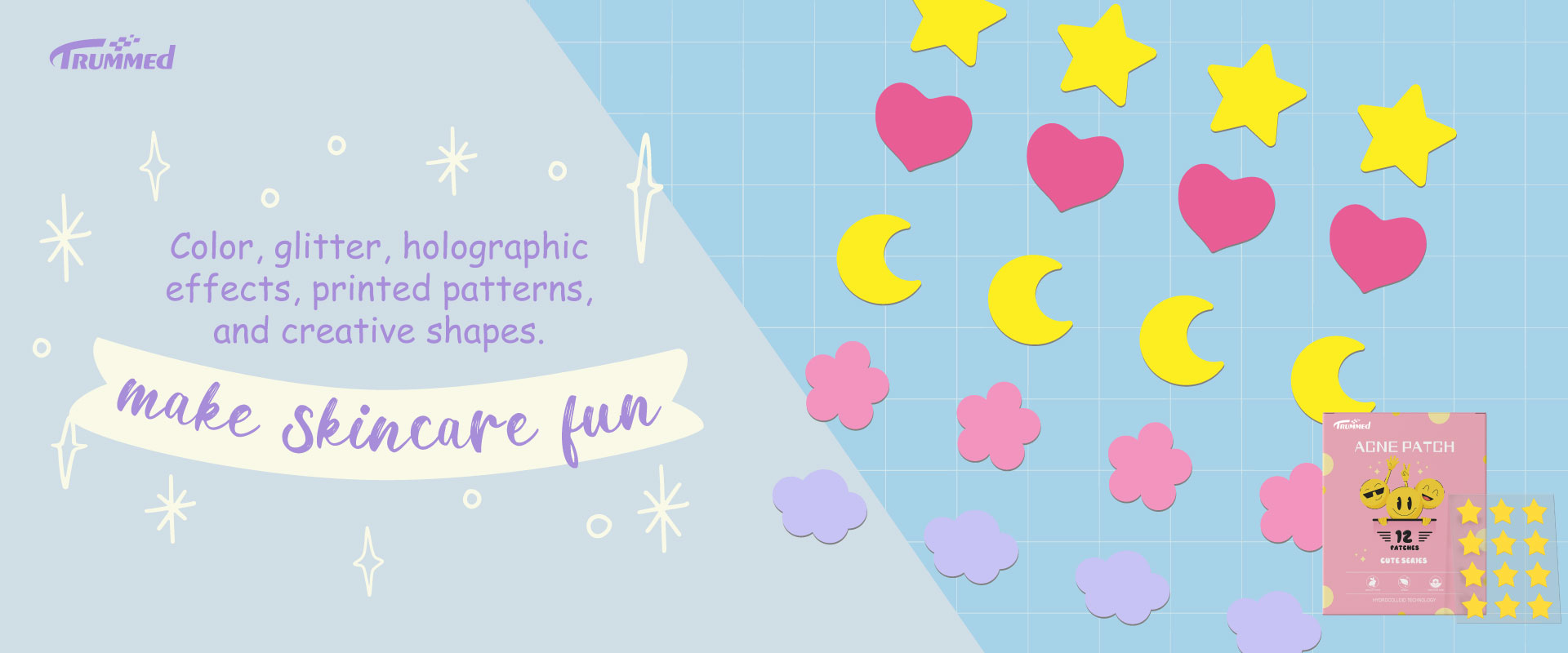
One of the most interesting changes in the pimple patch category is the shift from “hide the blemish” to “make skincare fun.”
Decorative pimple patches can be worn openly, turning a functional skincare product into a beauty accessory. This is particularly relevant for products targeting younger consumers and social-media-driven beauty trends.
Color, glitter, holographic effects, printed patterns, and creative shapes can all contribute to this positioning.
The result is a product that combines skincare functionality with visual appeal.
Shape Is Also a Product Development Decision
For brands, choosing a patch shape involves more than aesthetics.
The shape needs to work with the patch material, adhesive, die-cutting process, and packaging. Extremely complex designs may require additional production considerations, while very small details may affect the final appearance and usability of the patch.
Edge design is also important. Smooth, well-defined edges can improve the overall appearance and help the patch sit comfortably on the skin.
Therefore, the best custom shape is not simply the most eye-catching one. It should balance design, functionality, comfort, and manufacturability.
How Brands Can Use Custom Shapes
Custom shapes can support different product strategies:
· Hearts: playful, cute, and beauty-focused
· Stars: youthful, energetic, and eye-catching
· Flowers: soft, feminine, and lifestyle-oriented
· Geometric shapes: modern and minimalist
· Custom logos or symbols: strong brand recognition
Brands can also develop seasonal or limited-edition shapes to create newness and encourage repeat purchases.
The Future of Pimple Patch Design
As pimple patches continue to move beyond traditional acne care, customization will become an increasingly important part of product development.
The future may not be about choosing between a functional patch and a beautiful one. Instead, successful products can combine both.
From a simple circle to a glittering star or a recognizable brand symbol, the shape of a pimple patch can communicate what the product stands for before consumers even read the packaging.
For brands, this creates an opportunity to develop pimple patches that are not only effective and comfortable, but also recognizable, shareable, and uniquely their own.
With professional OEM/ODM support, brands can customize patch shapes, sizes, materials, printing, and packaging to develop products that match their target market and brand identity. The right shape may be a small detail, but it can make a big difference in how a pimple patch is seen.