Skin tears are a common type of superficial injury, especially prevalent among the elderly, individuals with fragile skin, and bedridden patients. Traditional care methods typically include cleaning the wound, applying medication, and bandaging, but these methods often fail to create an optimal healing environment and can be inconvenient. Recently, the use of wound closure dressing devices has significantly improved care results, offering a safer, faster, and more comfortable healing experience.
This article explores various types of wound closure dressing devices, their specific roles in caring for skin tears, and how to use them effectively.
1. Types and Characteristics of Wound Closure Dressing Devices
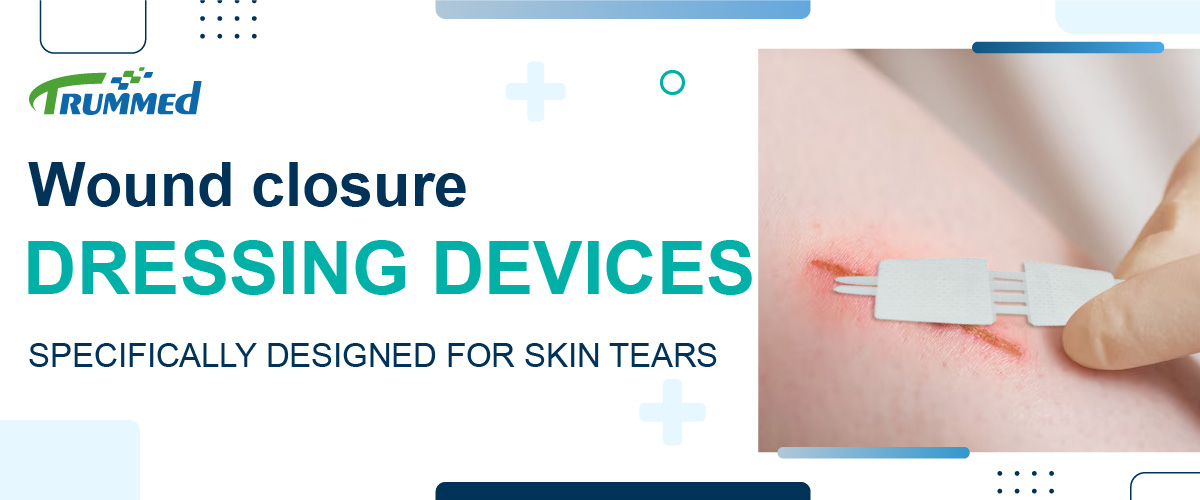
Wound closure dressing devices are specifically designed for skin tears, superficial cuts, and other wounds. Their primary functions are to keep the wound closed, create a moist healing environment, reduce infection risk, and provide cushioning to minimize secondary damage from friction or external pressure.
Adhesive Skin Closures
l Characteristics: Adhesive skin closures are made from highly adhesive materials that stick to the skin surface, holding the wound edges together without stitches.
l Application: Ideal for small, superficial tears or minor skin abrasions, particularly on areas prone to friction, such as arms and legs.
l Usage: After cleaning and disinfecting the wound, apply the tape across the wound edges and pull gently to bring the edges together. Keep the dressing clean and intact, avoiding frequent replacements.
Sutureless Closure Systems
l Characteristics: Sutureless closure devices use small hooks or clasps to close the skin without needles, reducing the pain and scarring associated with traditional stitches.
l Application: Suitable for larger wounds or those under higher tension that need firm stabilization, like moderate tears on fragil.
l Usage: Place the device on both sides of the cleaned wound and slowly close it to ensure firm alignment. Follow aseptic techniques during operation to avoid further irritation or damage to the wound edges.
Medical Skin Adhesives (Glue Dressings)
l Characteristics: These closure devices use fast-drying medical adhesives to form a protective film over the skin, keeping small wounds closed, waterproof, and cushioned.
l Application: Suitable for small, shallow tears, such as wounds on fingers or around small joints.
l Usage: After disinfecting, apply a small amount of adhesive to the wound edges, press them gently together, and allow the glue to dry. Avoid contact with water to maintain the closure’s integrity.
Micro Suturing Devices
l Characteristics: Micro suturing devices are innovative products that combine the strength of traditional suturing with the convenience of needle-free technology. They offer precise closure, reducing discomfort.
l Application: Suitable for moderate to severe tears, particularly on thicker skin or joints that require extra support.
l Usage: After cleaning, place the micro suturing device along the wound edges and press to close, ensuring the skin edges are aligned. Avoid pulling or friction post-application.
2. Major Benefits of Wound Closure Dressing Devices
1. Reduced Infection Risk
Closure dressings effectively seal the wound, minimizing exposure to airborne contaminants and bacteria. Some closure dressings even contain antibacterial properties, offering an added layer of protection.
2. Accelerated Healing
These devices hold wound edges together, reducing tension and promoting faster healing. By maintaining a moist environment, closure dressings also reduce scarring and improve overall healing quality.
3. Comfort and Convenience
Compared to traditional sutures, closure devices significantly reduce pain, making them especially suitable for the elderly and those with delicate skin. Many of these devices are easy to use, enabling patients or caregivers to apply them with minimal training.
4. Reduced Frequency of Care
Once applied, closure dressings usually do not require frequent changes. Their stable adherence during the healing process means less frequent care, which minimizes discomfort and inconvenience.
3. Key Considerations When Using Wound Closure Dressings
1. Maintain a Sterile Environment
Ensure hands are clean before using closure devices to prevent introducing contaminants. It’s recommended to clean the wound with saline or a mild disinfectant before application.
2. Choose the Appropriate Type of Dressing
Select the right closure dressing according to the wound’s specific requirements. Sutureless or micro suturing devices are ideal for larger, high-tension wounds, while adhesive skin closures or skin adhesives are better suited for small, shallow tears.
3. Avoid Pulling or Water Exposure
During the healing period, avoid tugging or pulling on the closure dressing to prevent secondary injury. Glue-based closures should be kept dry to ensure effective adherence.
4. Regularly Monitor Wound Healing
Even with closure devices, it’s essential to regularly check for signs of infection, such as redness, warmth, or discharge. If any abnormalities arise, seek medical attention promptly.
Conclusion
Wound closure dressing devices play an essential role in skin tear care, bringing revolutionary convenience and comfort to traditional wound management. They not only reduce infection risks but also speed up healing, making the care experience much more pleasant for patients. These devices are especially advantageous for elderly or fragile-skinned individuals requiring long-term care. As the technology continues to evolve and expand, wound closure devices are set to become even more widely applicable, providing enhanced skin care solutions in the future.