When a pimple suddenly appears, many people feel the urge to pop it right away. While this may seem like a quick fix, it often causes more problems than it solves. In recent years, acne patches have become a popular alternative for treating breakouts gently and effectively. But which method is truly safer and better for your skin—popping pimples or using acne patches? Let’s break it down.
1. Different Mechanisms: One Forces, One Heals
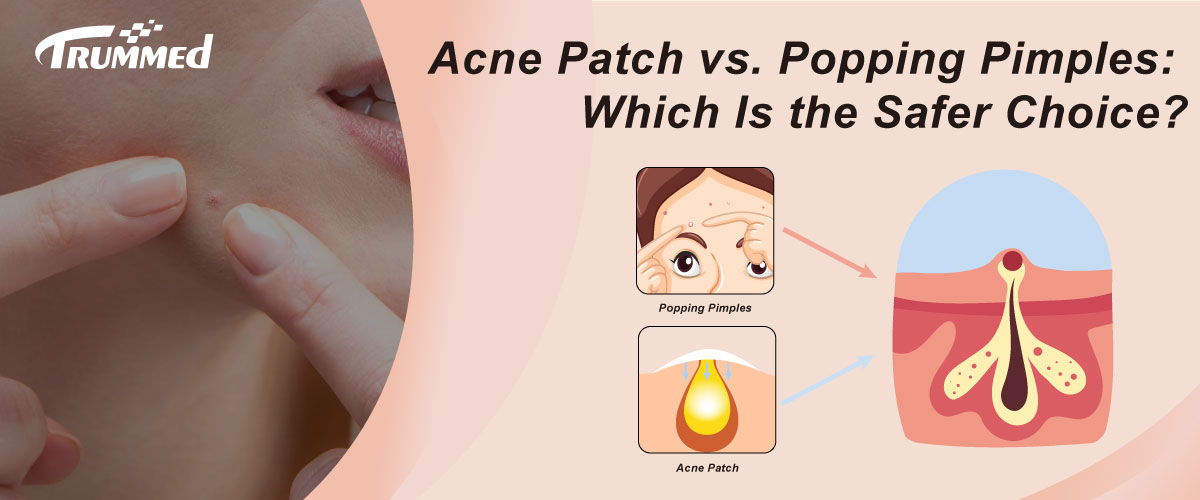
Popping pimples involves applying pressure to the skin to force out pus and sebum from clogged pores. However, this can easily rupture the follicle wall, pushing bacteria and debris deeper into the skin and worsening inflammation.
Acne patches, on the other hand, use hydrocolloid technology to absorb excess fluid from the pimple, maintain a moist healing environment, and protect the skin from external contamination. This encourages the blemish to heal naturally, without unnecessary trauma.
Simply put:
Popping = forceful, risky
Patches = gentle, healing-supportive
2. Risk Comparison: Popping Often Makes Things Worse
| Factor |
Popping Pimples |
Using Acne Patches |
| Infection Risk |
High – bacteria from fingers can enter the wound |
Low – patch acts as a barrier against contamination |
| Inflammation |
Can push bacteria deeper, causing swelling |
Reduces irritation and allows natural drainage |
| Scarring / Pigmentation |
High risk of post-acne marks and pitted scars |
Moist environment promotes cleaner healing, minimizing scarring risk |
| Recurrence |
Damages skin barrier, increasing chance of rebreakouts |
Protects the wound, supports faster and cleaner recovery |
Many people believe that popping a pimple “clears it out,” but in reality, the inflammation often spreads beneath the skin. Within a few days, the blemish may come back bigger and more painful, and sometimes leave a dark mark or scar behind.
3. Healing Outcome: Science Over Instant Gratification
A proper pimple treatment strategy focuses on gentle care, cleanliness, and supporting the skin’s natural healing process. Acne patches fit this approach perfectly.
Benefits of using acne patches:
- Absorb excess fluid and create a stable healing environment
- Prevent touching and picking, reducing the risk of secondary infection
- Turn white when absorbing pus, giving a clear indication of progress
- Discreet and easy to wear overnight or during the day
By contrast, popping pimples not only carries a higher risk of infection but also requires precision and sterilization that most people don’t follow at home.
Conclusion: Acne Patches Are the Smarter, Safer Choice
Overall, the risks of popping pimples far outweigh the temporary satisfaction it provides. Acne patches, however, offer a gentle, hygienic, and effective way to manage pimples. They help speed up healing, protect against scarring, and minimize the chance of further breakouts.
For the best results, pair acne patches with a mild cleanser, avoid unnecessary touching, and allow your skin to heal naturally.