In the realm of scientific research, Trummed Cell Culture Plate introduces pragmatic solutions for microorganism cultivation. Crafted from high quality polystyrene (PS) material using precision molds and automated techniques, this practical tool stands out for its simplicity and effectiveness.
Diverse Specifications to Meet Research Needs:
The Cell Culture Plate offers five selectable configurations: 6, 12, 24, 48, and 96 wells. With options of transparent, white, and black plates, researchers now enjoy enhanced flexibility to conduct microorganism cultivation under varying conditions.
Innovative Bottom Shapes for Customized Cultivation:
Categorized into flat, U-shaped, and V-Shaped bottoms based on their shapes, the Cell Culture Plate allows for tailored experimentation to better control cell or microorganism growth, thus optimizing cultivation outcomes.
Unidirectional Lid Design Reducing Contamination:
The unique unidirectional lid design, coupled with a coherent ring, significantly minimizes the risk of external contamination. This robust feature ensures the cleanliness of the cultivation environment, providing a reliable foundation for experiments.
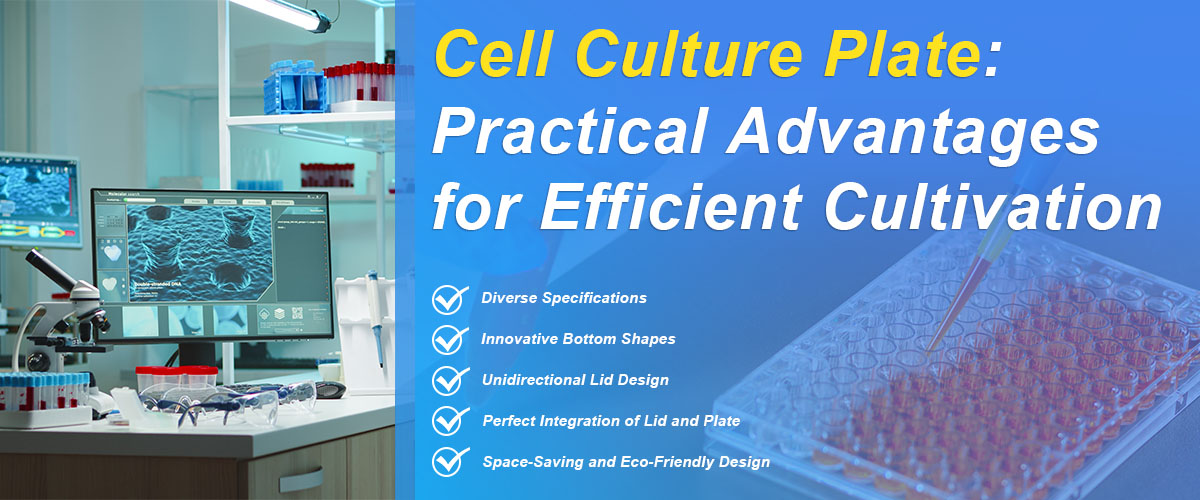
Perfect Integration of Lid and Plate for Optimal Air Exchange:
The seamless integration of the Cell Culture Plate's lid and plate allows for efficient air exchange, simultaneously preventing contamination and loss of medium. This contributes to the creation of an optimal growth environment for cells and microorganisms.
Groove Design Preventing Cross-Contamination:
The wells of the Cell Culture Plate feature a flange design that effectively prevents cross-contamination between different wells. Molded letters and numbers aid in quick well identification, enhancing experiment precision.
Space-Saving Stackable Design for Eco-Friendly Labs:
The unique protruding design enables easy stacking of Cell Culture Plates, effectively saving valuable laboratory space. This not only improves laboratory efficiency but also aligns with environmental sustainability by reducing laboratory waste.
Broad Compatibility for Various Instruments:
With excellent compatibility, the Cell Culture Plate adapts seamlessly to the requirements of most laboratory instruments. Whether used in automated analyzers or high-throughput screening systems, it provides researchers with a versatile tool, expanding their options in experimental setups.
Diverse Sterilization Methods Ensuring Aseptic Conditions:
The Cell Culture Plate offers a choice between ethylene oxide (E.O.) or gamma radiation sterilization methods, ensuring aseptic experimental conditions. This diverse selection provides researchers with flexible operational choices, guaranteeing the reliability and accuracy of experiments.
In conclusion, Trummed Cell Culture Plate bridges the gap in microbial cultivation by providing a straightforward yet efficient tool for researchers. Its emphasis on practicality makes it a reliable choice, contributing to advancements in scientific experiments without unnecessary complexity.