Why Dressing Choice Matters More Than You Think
Not all wounds heal the same way—and using the wrong dressing can significantly delay recovery.
From highly exuding chronic ulcers to shallow post-op wounds, clinicians today rely on three major solutions:
l Negative Pressure Wound Therapy (NPWT)
l Foam Dressings
l Alginate Dressings
Each works differently, targets different wound conditions, and plays a unique role in the healing timeline.
So how do you choose the right one?
1. Understanding the Core Difference (Start from the Root Cause)
The key factor that determines dressing choice is:
Exudate level + wound depth + infection risk
| Factor |
NPWT |
Foam |
Alginate |
| Healing Approach |
Active (mechanical stimulation) |
Passive absorption |
Bioactive gel formation |
| Best for Exudate |
Very high |
Moderate to high |
High |
| Wound Depth |
Deep |
Shallow–moderate |
Moderate–deep |
| Infection Risk |
High |
Medium |
Medium–high |
2. NPWT: Active Healing for Complex Wounds
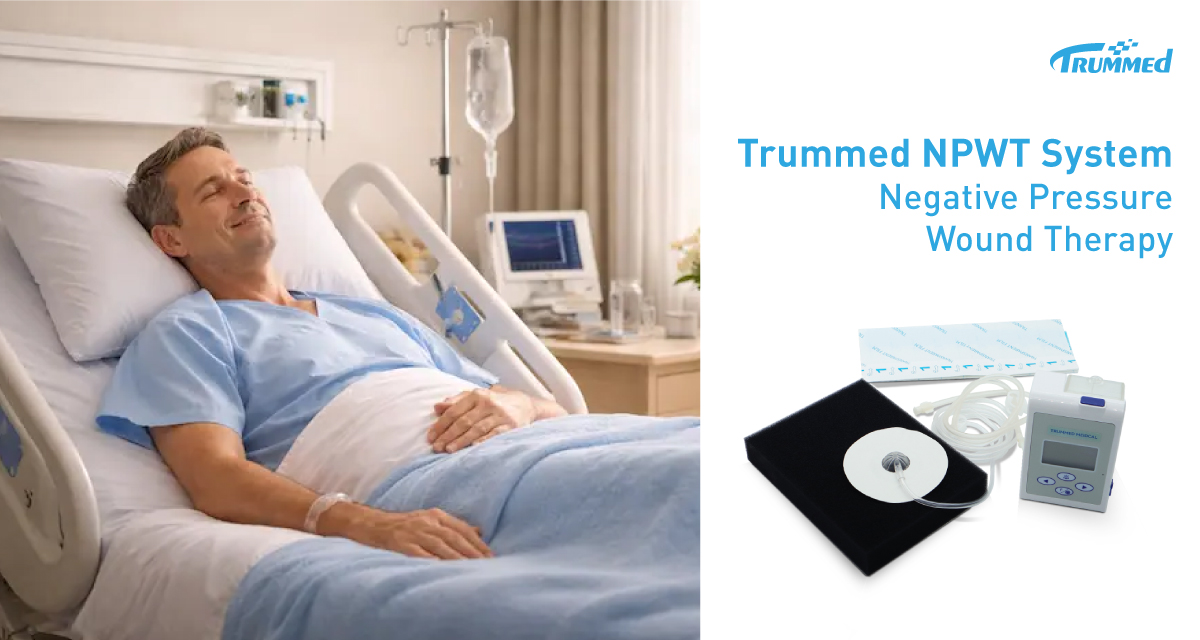
Negative Pressure Wound Therapy (NPWT) is not just a dressing—it’s a device-based therapy system.
How it works:
l Applies controlled negative pressure
l Removes exudate continuously
l Promotes granulation tissue formation
l Improves blood circulation
Best suited for:
l Diabetic foot ulcers
l Pressure ulcers
l Surgical wounds (dehiscence)
l Traumatic wounds
Key advantages:
✔ Accelerates healing in complex wounds
✔ Reduces edema and bacterial load
✔ Fewer dressing changes
Best Use Case:
When the wound is deep, heavily exuding, or hard-to-heal
3. Foam Dressings: The Versatile All-Rounder
Foam dressings are one of the most widely used standard wound care solutions.
How they work:
l Absorb excess exudate
l Maintain a moist wound environment
l Provide cushioning and protection
Best suited for:
l Pressure injuries
l Minor burns
l Post-operative wounds
l Granulating wounds
Key advantages:
✔ Comfortable and easy to use
✔ Good absorption capacity
✔ Cost-effective for routine care
Best Use Case:
When the wound is moderately exuding and in the healing phase
4. Alginate Dressings: High Absorption with Bioactivity
Alginate dressings are made from seaweed-derived fibers and are ideal for managing heavy exudate.
How they work:
l React with wound fluid to form a gel
l Maintain moisture balance
l Help with autolytic debridement
Best suited for:
l Bleeding wounds
l Deep cavity wounds
l Infected or sloughy wounds
Key advantages:
✔ Excellent absorption
✔ Supports natural debridement
✔ Conforms to irregular wounds
Best Use Case:
When the wound is wet, irregular, or requires debridement support
5. Side-by-Side Comparison (Quick Decision Guide)
| Scenario |
Recommended Solution |
| Heavy exudate + deep wound |
NPWT |
| Moderate exudate + surface wound |
Foam |
| Very wet wound + cavity |
Alginate |
| Hard-to-heal chronic wound |
NPWT |
| Cost-sensitive routine care |
Foam |
6. Not Competitors—But a Healing Continuum
Here’s the key insight many overlook:
NPWT, Foam, and Alginate are not substitutes—they are sequential solutions
A typical healing pathway may look like:
1. NPWT → for initial control (infection, exudate, depth)
2. Alginate → for continued exudate management
3. Foam → for protection during final healing stage
This staged approach improves outcomes and reduces overall treatment time.
7. Conclusion: Choose Based on Wound Stage, Not Preference
There is no “best dressing”—only the right dressing at the right time.
l Choose NPWT for complexity and acceleration
l Choose Alginate for high exudate and debridement
l Choose Foam for stabilization and protection