
Introduction
Summer travel means beaches, hiking, camping, and outdoor adventures — but it also means more exposure to mosquitoes and insects.
A small bug bite may seem harmless at first. However, itching often leads to repeated scratching, which can irritate the skin and make the bite area uncomfortable.
When preparing a travel first aid kit, many people ask:
Should I bring an anti-itch cream or a bug bite patch?
The answer depends on your travel needs, skin comfort, and daily activities.
1. How Do Anti-Itch Creams Work?
Anti-itch creams are designed to relieve discomfort by applying active ingredients directly onto the skin.
They may help by:
· calming itching sensations
· reducing skin discomfort
· providing temporary relief
However, creams also have some practical limitations during travel:
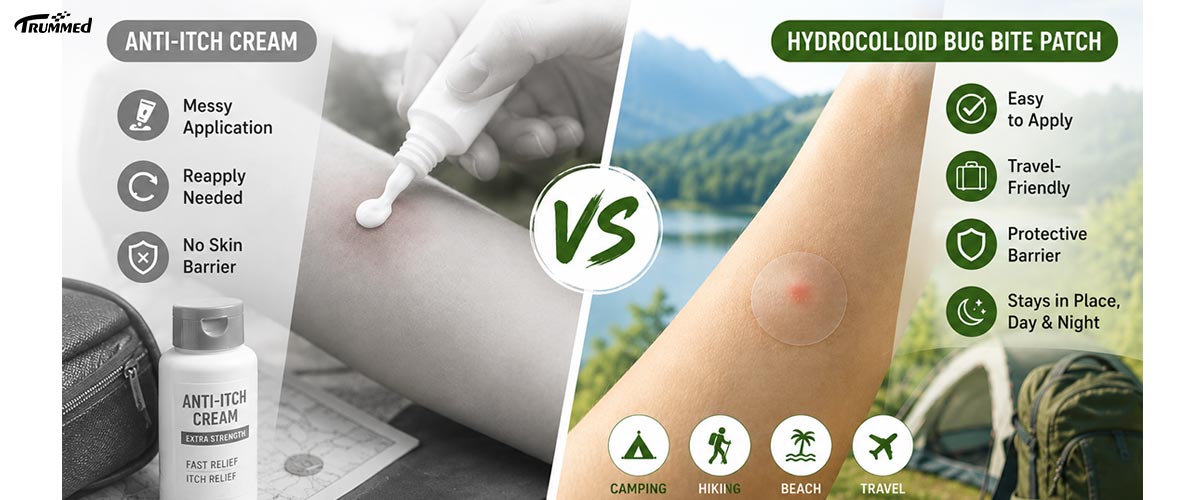
Messy Application
Creams need to be applied directly to the skin and may leave a sticky or greasy feeling, especially in hot and humid weather.
Frequent Reapplication
Sweating, swimming, and outdoor activities may reduce how long the product stays on the skin.
No Physical Barrier
Creams can soothe the area but usually do not prevent touching or scratching.
2. How Do Hydrocolloid Bug Bite Patches Work?
Hydrocolloid bug bite patches work differently.
Instead of only applying an ingredient to the skin, they create a protective layer over the bite area.
A hydrocolloid patch can:
Protect the Bite Area
The patch acts as a physical barrier, helping reduce direct contact from fingers, clothing, or external friction.
Help Reduce Scratching
Because the bite is covered, it becomes easier to avoid unconscious scratching — especially during sleep or outdoor activities.
Maintain a Skin-Friendly Environment
Hydrocolloid materials are designed to absorb moisture and create a comfortable environment around the applied area.
3. Bug Bite Patch vs Anti-Itch Cream: Travel Comparison
4. Why Are Patches More Convenient for Summer Travel?
Summer trips often involve:
- Camping
- Beach vacations
- Hiking
- Long flights
- Road trips
In these situations, travelers usually want skincare products that are:
- compact
- clean
- easy to use
- no extra tools required
A hydrocolloid bug bite patch can simply be applied and left in place while you continue your activities.
5. When Should You Choose a Bug Bite Patch?
A bug bite patch can be especially useful when:
You are traveling with kids
Children often scratch bites without noticing. Covering the area can help reduce repeated touching.
You spend time outdoors
Hiking, camping, and beach activities increase exposure to insects and friction.
You need overnight protection
A patch can stay on the skin while sleeping, helping prevent scratching.
6. Beyond Bug Bites: The Growing Use of Hydrocolloid Patches
Hydrocolloid technology is no longer limited to one skincare category.
Today, hydrocolloid patches are widely used for:
- acne care
- blister protection
- wound protection
- skin barrier applications
- insect bite care
This makes hydrocolloid patches a versatile addition to modern personal care and travel kits.
Conclusion
Both anti-itch creams and bug bite patches have their place.
Creams focus on applying soothing ingredients, while hydrocolloid patches provide a protective layer that helps care for the bite area during daily activities.
For summer travel, camping, and outdoor adventures, a portable hydrocolloid bug bite patch offers a simple, clean, and convenient way to protect irritated skin.