Wound Dressing Types and It’s Properties
Wound dressing is a material used to cover sores, wounds or other skin damage, which replaces some important functions of damaged skin (such as defense, etc.).
Referring to the 2005 Pressure Ulcer Guidelines of the British Royal School of Nursing, dressings can be divided into five categories: contact dressings (ie, traditional dressings), active dressings, passive dressings, interactive dressings, and antibacterial dressings.
1. Contact Dressings (ie, Traditional Dressings)
The biggest feature of this kind of dressing is to make secretions discharge smoothly, and it is usually used for slightly exuding wounds.
1.1 Gauze
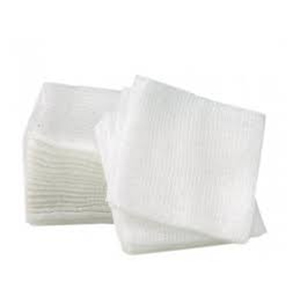
Applicable Wounds: passively cover wounds and absorb exudates, provide limited protection for wounds, and are suitable for routine treatment of common wounds.
Main Ingredients: generally processed from cotton, soft hemp and flax.
Advantages:
● Protect the wound surface;
● Strong and fast absorption of wound exudate;
● The material is economical and the price is cheap;
● The production and processing process is simple.
Shortcoming:
● Cannot keep the wound moist environment;
● May cause trauma during wound dressing change;
● Not anti-bacterial
● Less absorption, frequent replacement, time-consuming and painful for patients.
1.2 Synthetic fiber (non-woven fabric)
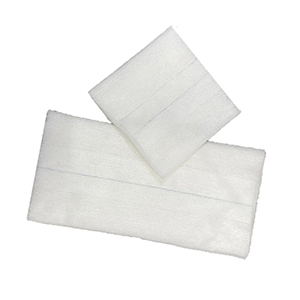
The material is synthetic fiber. Compared with gauze dressing, it has better drainage, anti-adhesion, moisturizing and other effects; it has better antibacterial effect and is beneficial to wound healing; the absorption performance is relatively improved, and the dressing fiber is not easy to fall off. However, this type of dressing still has the same disadvantages as gauze, such as high permeability and no barrier to external particulate pollutants.
1.3 Vaseline Gauze
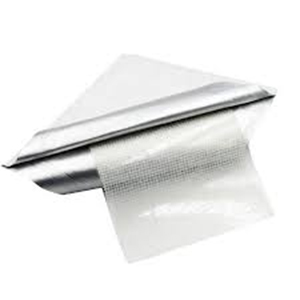
Applicable Wounds:It is used for infected purulent wounds, or wounds with local bleeding and exudate.
Main Ingredients: Consists of degreased sterile gauze and petroleum jelly.
Advantages:
● Block the wound surface and not adhere to the wound;
● Protect the growth of wound granulation;;
● Reduce bacterial infections;
● Easy drainage.
Shortcoming:
● Low absorption
● Not anti-bacterial
● Need secondary dressing.
● It should not be left on the wound for too long.
2. Active Dressings
Active dressings affect the physiological and biochemical characteristics of the wound by promoting wound chemotaxis, inhibiting protease expression, or reducing the burden of apoptosis, and directly promote the healing process.
2.1 Collagen Dressing
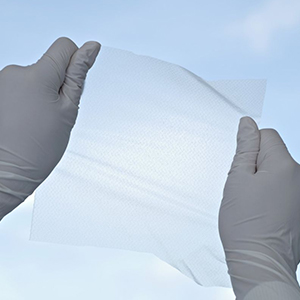
Applicable Wounds:It is suitable for all kinds of non-infected and difficult-to-heal wounds.
Main Ingredients: Collagen
Working Principles: Collagen is the most abundant and widely distributed protein in vertebrates. In vitro application can promote the synthesis and metabolism of skin tissue and cell regeneration, increase the local temperature and humidity of the skin, accelerate the blood circulation and metabolism of local skin cells, and benefit the renewal of skin cells Replacement, thereby accelerating tissue regeneration and repair.
Advantages:
● It has a certain repairing effect on wounds;
● There is a certain role in the prevention of scar hyperplasia.
Shortcoming:
● Not suitable for infected wounds;
● The effect of inhibiting scarring is limited.
3. Passive Dressings
Passive dressings create a local environment conducive to healing without altering local physiology or creating interactions. Passive dressings are usually used to control exudation, prevent contamination, or control odor.
3.1 Film Dressing
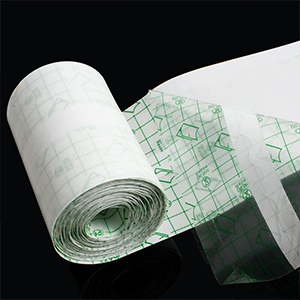
Applicable Wounds: For superficial wounds or as a protective film over other dressings.
Main Ingredients: This type of dressing is made of polymers covered with viscous substances on one side. Commonly used polymers are polyurethane, polyethylene, polyacetate lactone, polytetrafluoroethylene, etc.
Working Principles: Because it can adhere tightly to the wound surface, it can effectively retain the wound exudate, thereby providing a moist environment conducive to wound healing.
Advantages:
● Block environmental microorganisms from invading the wound and prevent cross-infection;
● Self-adhesive, easy to use;
● Transparent and easy to observe.
Shortcoming:
● Not suitable for absorbing wound exudate.
● Cannot be used in dead space or deep cavity wounds;
● Do not use on fragile or infected wounds.
3.2 Foam Dressing
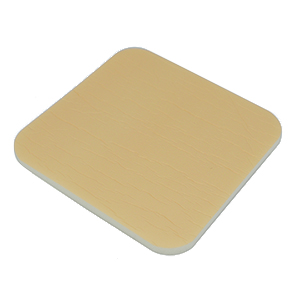
Applicable Wounds: It is suitable for wounds with moderate to heavy exudate, or fragile wounds where the skin has lost its ability to stick.
Main Ingredients: The dressing is foamed from polymer materials, and the surface is covered with a polyurethane semipermeable membrane.
Working Principles: It has a strong ability to absorb exudate and lock liquid, and can provide a constant temperature and moist microenvironment to accelerate wound healing.
Advantages:
● Provide a moist, warm and airtight healing environment;
● Absorb medium to a large amount of exudate, reduce the impact of exudate and maceration on the wound;
● Gas and water vapor can pass through and can be used to infect wounds;
● Comfortable, easy to use, good compliance, easy to tear off, does not hurt the skin;
● Heat insulation, buffering external pressure, and prolonging the use time of wound dressings.
Shortcoming:
● Opaque, difficult to observe the wound;
● Do not use on dry wounds, black scab wounds;