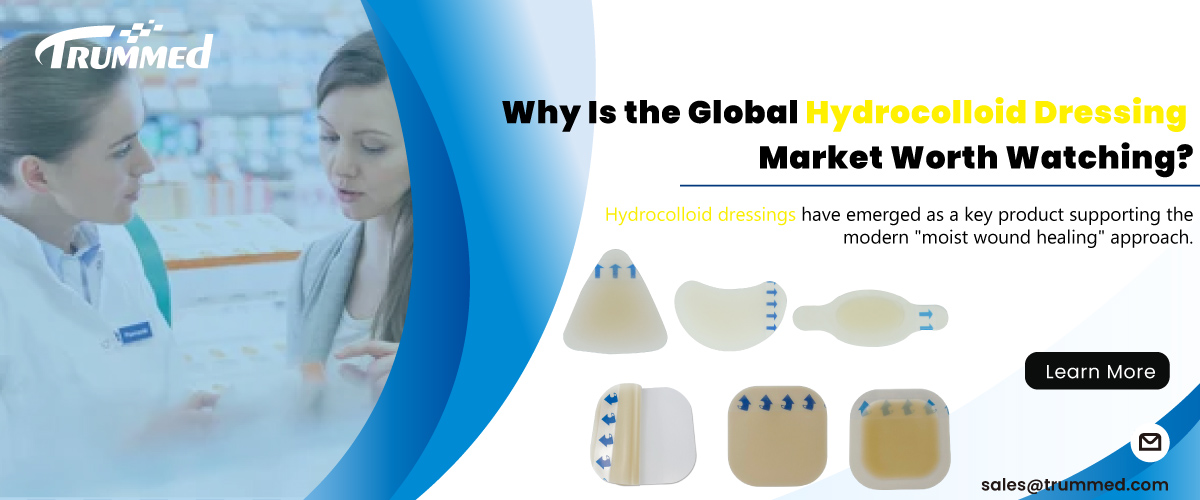
In the global medical consumables sector, the wound care segment has maintained a compound annual growth rate (CAGR) of over 6%. Among various wound care products, hydrocolloid dressings have emerged as a key product supporting the modern "moist wound healing" approach.
According to data from MarketsandMarkets (2024), the global hydrocolloid dressing market is expected to exceed USD 2.1 billion by 2027. Key growth drivers include:
*An aging global population, leading to a rising number of chronic wounds such as pressure ulcers and diabetic foot ulcers.
*Increased demand for post-surgical home care, which favors advanced dressings with user-friendly features.
*Healthcare investment growth in emerging markets, driving import demand for reliable basic consumables.
*The rapid expansion of OTC (over-the-counter) retail channels, including pharmacies and e-commerce, creating new use scenarios for hydrocolloid dressings.
In particular, hydrocolloid dressings are increasingly adopted in Southeast Asia, the Middle East, Africa, and Latin America due to their cost-effectiveness, drug-free composition, and user convenience. In many markets, they are gradually replacing traditional gauze, PU films, and foam dressings.
What Makes Hydrocolloid Dressings Technically Competitive?
Hydrocolloid dressings are self-adhesive wound coverings composed of high-performance polymers such as polyisobutylene, gelatin, pectin, and CMC. They offer multiple clinical advantages:
1. Scientifically Validated Moist Healing
*The dressing forms a gel upon contact with wound exudate, maintaining optimal moisture for tissue regeneration.
*It reduces the risk of scab formation and secondary infections.
*Healing time can be reduced by 20–40% compared to dry dressing methods.
2. Non-irritating and Safe for Sensitive Patients
*Free from antibiotics or active ingredients, making them safe for postoperative patients, diabetics, and those with sensitive skin.
*In the European OTC market, over 40% of non-medicated wound care products fall into the hydrocolloid category.
3. Waterproof and Bacteria-Resistant
*The PU film backing is waterproof yet breathable, enabling showering without dislodging the dressing.
*Provides a physical barrier against external contaminants.
4. Easy to Use and Promote
*No secondary fixation required.
*Supports various shapes (round, square, customized cuts) and multi-language packaging, ideal for both retail and clinical use.
What Are Global Buyers Really Looking For?
Based on our analysis of client data from over 30 countries (including the U.S., Germany, Vietnam, and Saudi Arabia), here are the top priorities of international buyers:
| Buyer Concerns |
Underlying Rationale |
| Exudate Absorption & Wear Time |
Chronic wounds with heavy exudate require long-wear dressings to reduce frequency of change. |
| Thickness & Aesthetics |
Market is segmented into high-care (>8mil) and daily-use (<3mil) variants depending on end use. |
| Adhesion vs Skin Comfort |
Hospitals focus on secure adhesion; OTC consumers prefer painless removal. |
| Regulatory Compliance |
CE MDR, FDA 510(k), SFDA, and other registrations are mandatory for import in many regions. |
| OEM/ODM Capability |
Brands often need private labeling, multilingual packaging, and barcode-ready designs. |
Partner with a Reliable Hydrocolloid Manufacturer
Whether you're a medical distributor, retail brand, hospital procurement group, or online seller, hydrocolloid dressings are a growing category with proven clinical and commercial value.
With strong R&D support, regulatory readiness, and full OEM/ODM services, we’re here to help you