What is a Hydrocolloid Dressing?
A hydrocolloid dressing is a special type of wound dressing used to protect and accelerate wound healing. It looks like a soft, thin sheet that contains absorbent materials capable of creating a moist environment over the wound. This moist environment helps wounds heal faster while also protecting them from external contaminants. Let's explore when to use hydrocolloid dressings and when not to, in simple terms.
When Should You Use Hydrocolloid Dressings?
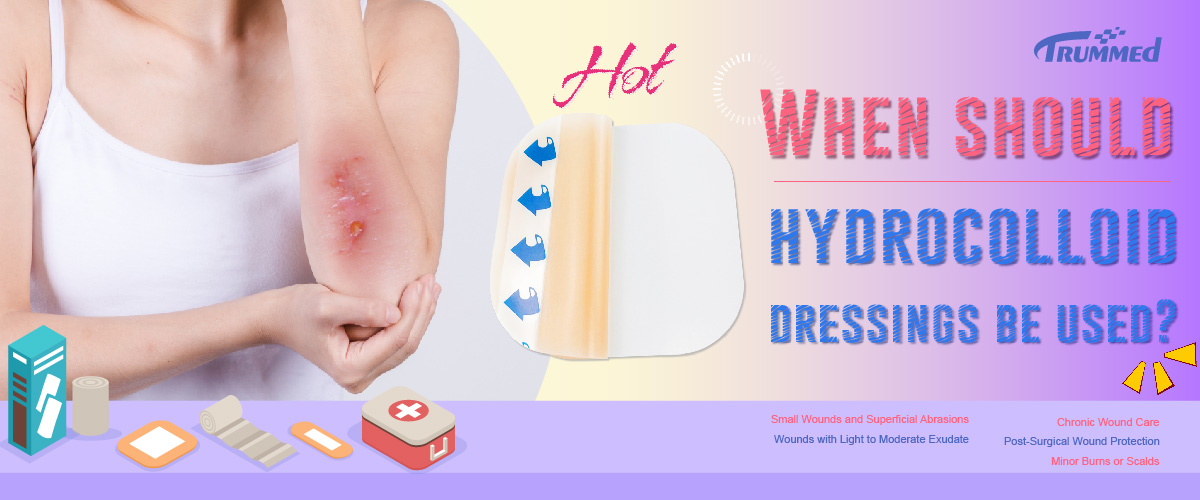
Hydrocolloid dressings offer many benefits and can be used for various types of wound care. Here are the main scenarios where they are suitable:
Small Wounds and Superficial Abrasions
If you have a small skin abrasion, minor cut, or scratch, hydrocolloid dressings are a great choice. They can cover the wound, forming a protective layer that prevents bacteria and dirt from entering, thus reducing the risk of infection.
Wounds with Light to Moderate Exudate
Exudate refers to the fluid that oozes from a wound. For wounds with light to moderate exudate, such as newly healed surgical wounds or superficial pressure ulcers, hydrocolloid dressings can absorb the fluid while keeping the wound moist, promoting faster healing.
Chronic Wound Care
Hydrocolloid dressings are especially helpful for hard-to-heal chronic wounds, such as pressure ulcers in bedridden patients. They help maintain a moist environment, promoting the growth of new tissue and speeding up wound repair.
Post-Surgical Wound Protection
During the healing process after surgery, hydrocolloid dressings can be used to protect the incision site and reduce irritation from friction. Since these dressings are usually transparent or semi-transparent, they also allow easy monitoring of the healing progress.
Minor Burns or Scalds
For superficial second-degree burns or mild heat injuries, hydrocolloid dressings can help maintain a moist wound environment, reduce pain, and promote faster healing.
 When Not to Use Hydrocolloid Dressings
While hydrocolloid dressings have many advantages, they are not suitable for all wounds. Here are some situations where they should be avoided:
Wounds with Heavy Exudate
If a wound produces a large amount of exudate, a hydrocolloid dressing may not be able to absorb enough fluid, leading to saturation and even detachment of the dressing. In such cases, a more absorbent dressing should be used.
Infected Wounds
If a wound shows signs of infection, such as redness, swelling, warmth, or pus discharge, hydrocolloid dressings might promote bacterial growth. For infected wounds, it is better to use dressings that contain antimicrobial properties.
Benefits of Hydrocolloid Dressings
Hydrocolloid dressings accelerate wound healing by creating a moist environment and also help minimize scar formation. They are soft, comfortable, conform to different body parts, and cause minimal irritation when changed, making them ideal for light to moderate wound care.
Conclusion
Hydrocolloid dressings are practical wound care materials suitable for small wounds, wounds with light to moderate exudate, chronic wounds, post-surgical wounds, and minor burns. However, they should be avoided for heavily exuding or infected wounds. Understanding how to properly use hydrocolloid dressings can help improve daily wound care practices.